Fluverm vs. Kilverm: Which Chicken Wormer is Right for Your Flock?
Choosing a worming product for your backyard chickens can be confusing, especially when two products look similar on the shelf. Two of the most common choices among Australian poultry keepers are Vetsense Fluverm and Kilverm Poultry Wormer. Both are registered Australian products, both are suitable for laying hens, and both cover the common intestinal worms. The differences are narrower than most comparisons suggest – and they come down to tapeworm, how you administer the dose, and cost.
Here is an honest side-by-side, based on what is actually on each label.
Why Worming Your Chickens Matters
Worms reduce egg production, cause weight loss and, in heavy burdens, can make a bird genuinely unwell. Regular worming keeps the load manageable, which matters most in backyard runs where chickens are on the same ground year after year, or free range where exposure is higher.
A healthy chicken can carry a small number of worms without any sign of it. The aim is control, not eradication.
What Each Product Covers
This is where most online comparisons get it wrong, so it is worth being precise. Coverage below is taken from the Australian labels.
| Worm | Fluverm | Kilverm |
|---|---|---|
| Large roundworm (Ascaridia galli) | Yes | Yes |
| Caecal worm (Heterakis gallinarum) | Yes | Yes |
| Threadworm / hairworm (Capillaria spp.) | Yes | Yes |
| Tapeworm (Raillietina spp.) | Yes – at the higher dose rate | No |
| Gapeworm (Syngamus trachea) | No | No |
Why it matters: on the three common intestinal worms, these two products do the same job. The only coverage difference is tapeworm, which Fluverm covers at its higher dose rate and Kilverm does not claim at all.
Neither Fluverm Nor Kilverm Covers Gapeworm
Gapeworm is worth its own section, because it is the one people most often buy the wrong product for.
Gapeworm lives in the windpipe rather than the gut, so it behaves nothing like an intestinal worm. The signs are respiratory:
- Gasping, or what looks like repeated yawning
- Stretching the neck upward
- Shaking the head, as if trying to dislodge something
- Coughing, gurgling or wheezing
Gapeworm is not on the Australian label for either Fluverm or Kilverm. If you have a bird showing these signs, neither of these products is the answer, and worming with them will cost you time that a struggling bird may not have.
Those same signs also overlap heavily with chicken respiratory illness, which is a completely different problem with a completely different course of action. The two are frequently confused.
If your birds are gasping or stretching their necks, speak to a vet. You can read more about telling the two apart in our guide to the symptoms of chicken gapeworm.
Fluverm vs. Kilverm – The Real Differences
1. Tapeworm
Fluverm: Covers tapeworm at the higher dose rate (double the standard rate).
Kilverm: Does not claim tapeworm.
Why it matters: tapeworm is less common than roundworm in backyard flocks, but if you have seen segments in droppings or you have a persistent problem that ordinary worming has not shifted, this is the one genuine coverage gap between the two.
2. Eggs and Meat
Fluverm: No egg withholding period. Meat withholding is not stated on the label.
Kilverm: Eggs from treated birds have not shown residues and are safe to eat. Do not use within 7 days of slaughter for human consumption.
Why it matters: if you keep hens for eggs, both let you keep collecting and eating eggs right through treatment, which is the thing that most often causes people to put worming off. If you also raise meat birds, check the label before you treat, because the two products differ here.
3. How You Give It
Fluverm: A powder mixed into feed, fed for 7 consecutive days. The treated feed needs to be the only food available so every mouthful carries the dose. The tub includes a 13g scoop, which covers 21.5kg of feed.
Kilverm: A liquid added to drinking water as a single dose, repeated later (see below). The routine matters: withhold water for two hours before nightfall, mix the medicated water at daybreak, and replace it once consumed or after 8 hours, whichever comes first.
Why it matters: this is the difference most people actually feel. Fluverm is a week of mixing feed with no timing pressure. Kilverm is one morning of getting the water routine right. Neither is harder, they just fail in different ways – Fluverm if birds are getting food elsewhere, Kilverm if the medicated water is not drunk promptly.
4. Repeat Treatment
Fluverm: A 7-day course.
Kilverm: Repeat two weeks after the first dose.
Why it matters: worming once rarely finishes the job. Worms spread through eggs passed in droppings, and the repeat exists to catch the next generation once those eggs have developed. Clean the coop or run thoroughly about 24 hours after treating, or birds simply pick the parasite straight back up off the ground.
5. Cost
Fluverm: A larger upfront outlay for a 600g tub that lasts a long time in a small flock.
Kilverm: A lower upfront cost, in 125ml and 500ml bottles.
Why it matters: per treatment the gap narrows considerably, because the Fluverm tub goes a long way. For a couple of hens, the smaller Kilverm bottle is the cheaper way in. Current pricing is on each product page.
Why We Don’t Recommend Avitrol Tablets
You may come across Avitrol Bird Wormer Tablets as another option. Avitrol is not approved for use with egg or meat-producing birds, so it is not suitable for backyard chickens you take eggs from. At Dine-A-Chook, we do not stock Avitrol for this reason.
How to Choose Between Them
- Do you suspect tapeworm? – Fluverm is the one of the two that covers it.
- Do you want to avoid the water-timing routine? – Fluverm mixes into feed and is fed for 7 days.
- Would you rather dose once and be done? – Kilverm is a single dose in drinking water, repeated in two weeks.
- Are you buying for a couple of hens? – The small Kilverm bottle is the lower-cost way to start.
- Are your birds gasping or stretching their necks? – Neither product is right. Those are gapeworm or respiratory signs. Speak to a vet.
Final Thoughts
For routine worming of laying hens, Fluverm and Kilverm cover the same three common intestinal worms and both let you keep eating the eggs. Choose Fluverm if you want tapeworm coverage as well, or you prefer dosing through feed. Choose Kilverm if you prefer a single liquid dose in drinking water or a lower upfront cost.
Whichever you use, worm regularly rather than waiting for symptoms, repeat the treatment as the label directs, and clean the coop afterwards. That routine does more for a flock than the choice between these two products.
In the Dine-A-Chook Range
Both are registered Australian products and we stock both, so you can pick the one that suits how you like to dose.
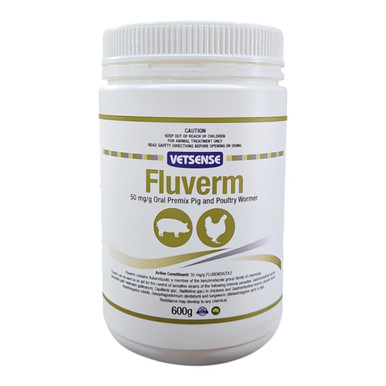
$69.95 Powder, mixed into feed. Covers tapeworm at the higher rate. |
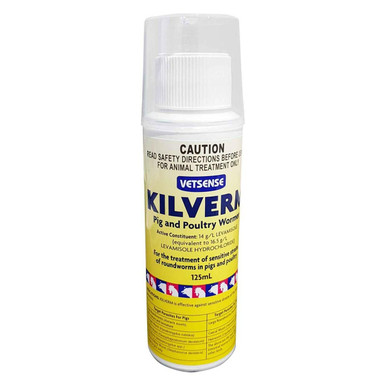
$15.95 Liquid, in drinking water. Also in 500ml. |
Need a drinker for medications?
Kilverm goes into drinking water, and the medicated water needs to be drunk promptly – replaced once consumed or after 8 hours, whichever comes first. Mixing a dose into a 20 litre drum means most of it is tipped out. A small drinker kept aside for worming is easier to dose accurately, and far less wasteful.
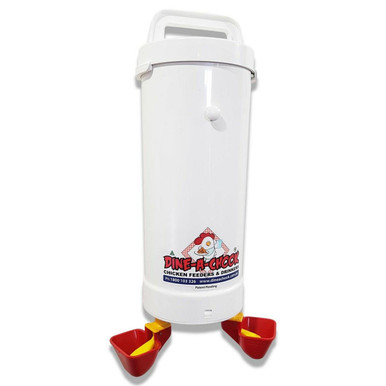
$54.95 Two cups, so more birds can drink at once. |
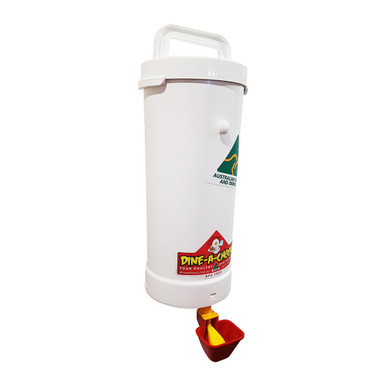
$49.95 The smaller option for a couple of hens. |
Always read the label and follow the directions for use. If you are worried about a bird, speak to a vet.