

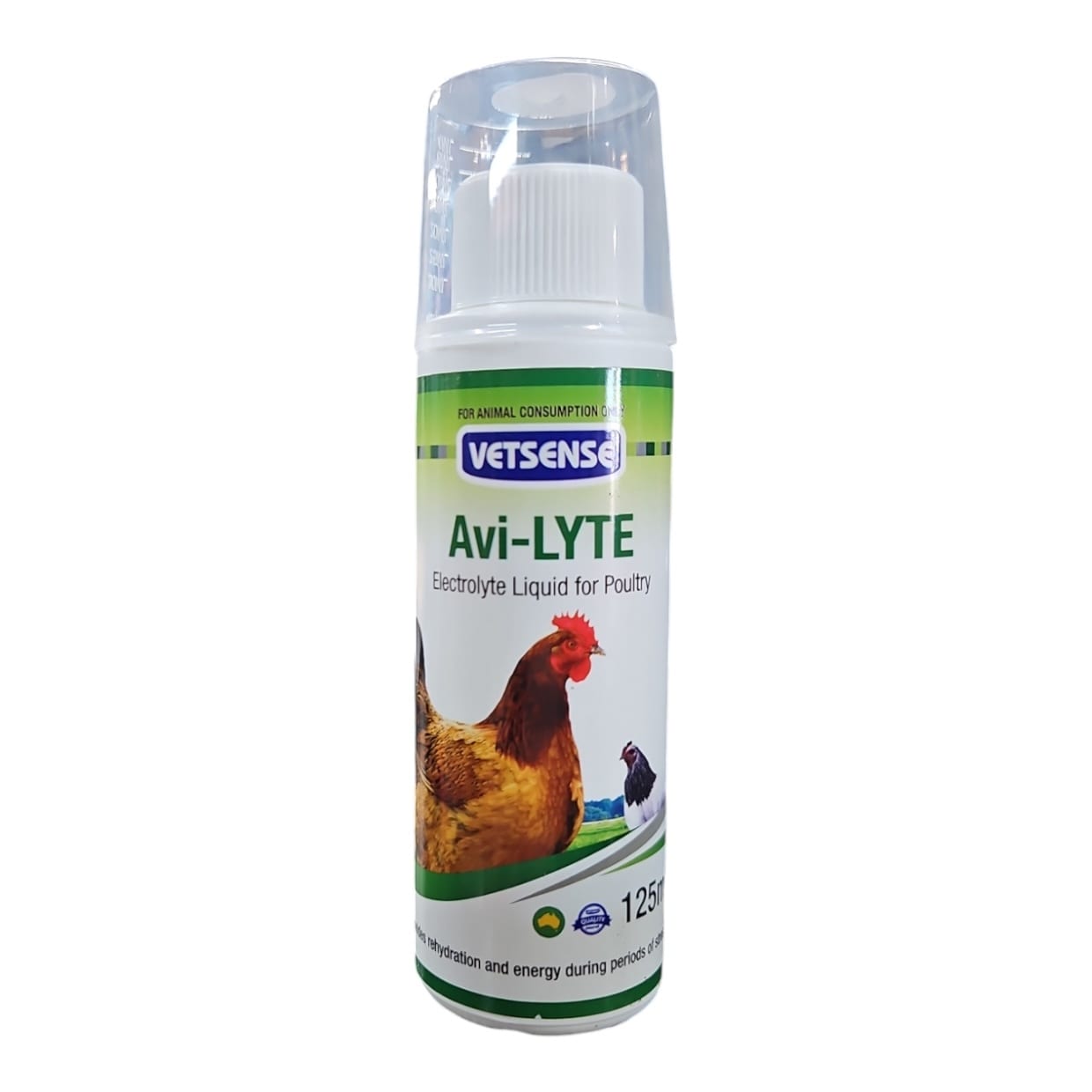

- Liquid electrolytes for chickens — mixes straight into the drinking water
- For heat stress, illness and transport — the days a bird runs down faster than she can drink
- Easy dosing for our drinkers: 16mL in the 2 Litre, 32mL in the 4 Litre (8mL per litre)
- Smaller birds, chicks and ducks are covered — they simply drink less of the same mix
- Electrolytes plus glucose — potassium, sodium, chloride and magnesium ions
- 125mL bottle — the backyard flock size, from Vetsense (the company behind Kilverm)
- Liquid electrolytes for chickens — goes in the drinker
- Heat stress, illness and transport
- 16mL in the 2L drinker, 32mL in the 4L
Electrolytes for chickens, sized for a backyard flock
Heat, illness and transport all do the same thing to a chook: they run her down, and water alone doesn’t put back what she’s losing. Avi-LYTE is a liquid electrolyte and glucose supplement for exactly those days. It mixes straight into the drinking water, so a stressed bird doses herself every time she drinks.
In an Australian summer, this is the bottle to have on the shelf before the heatwave arrives — a panting hen is not the moment to be waiting on a delivery.
When to reach for it
Heat stress — the big one. Panting, wings held out from the body, off her food on a hot day: that bird is losing electrolytes fast. Dose the water daily while the heat lasts.
Illness and recovery — a bird that’s off her feed is running on nothing. Electrolytes and glucose in the water help her keep her strength up while she comes good.
Transport and new arrivals — the trip home is a stressful day for a bird. A dosed drinker waiting at the other end is a good welcome.
How to dose it
The mixing rate is 8mL per litre of drinking water — the label works from 4mL in 500mL of water for an average 2kg hen, and smaller birds simply drink less of the same mix. In our own drinkers, that comes out at:
| Drinker | Avi-LYTE per fill |
|---|---|
| Dine-A-Chook 2 Litre Drinker | 16mL |
| Dine-A-Chook 4 Litre Drinker | 32mL |
| Any other container | 8mL per litre of water |
Give it daily while the stress lasts — a heatwave, an illness, the first day or two home — and mix it fresh each day. Then back to plain water.
The 125mL bottle is around eight fills of the 2 Litre drinker, or four of the 4 Litre — a heatwave’s worth for a backyard flock.
Getting it into them
Mix the day’s dose at first light, before the heat arrives, and make the dosed drinker the water they’ll actually use — in the shade, where they shelter through the middle of the day. A Dine-A-Chook drinker keeps the mix clean instead of full of bedding by mid-morning.
On a genuinely hot day, shade and cool water do the heavy lifting — the electrolytes put back what the panting costs her.
Works alongside
Hot weather is hard on shells. Paired with Avi-Calcium, it can support shell quality through the warm months. The rest of the vitamins and minerals range is here.
Worth reading before you need them: how to help a sick chicken recover, and the ten minerals and vitamins that matter most.
Specifications
| Size | 125mL bottle |
| Mixing rate | 8mL per litre of drinking water — the label works from 4mL in 500mL for an average 2kg hen (2mL per kilogram) |
| In our drinkers | 2 Litre Drinker: 16mL per fill · 4 Litre Drinker: 32mL per fill |
| When | Heat stress, illness and recovery, transport — daily while it lasts, mixed fresh |
| Contains (per label) | Potassium ions 21.76g, sodium ions 0.6715g, chloride ions 22.77g, magnesium ions 0.0223g, glucose 30g |
| Suits | Chickens and other birds — dosed by body weight |
| Storage | Below 30°C in a cool, dry place |
| Maker | Vetsense — the same company behind Kilverm |
Always read the label and follow the directions for use. If a bird is unwell, speak to a vet. For more on keeping a flock healthy, visit our Chook School.
Frequently Asked Questions
Heat stress, dosing and the electrolyte questions we get asked every summer.
When do chickens need electrolytes?
Three situations, and they all look the same to the bird: heat stress (panting, wings held out from the body, off her food on a hot day), illness and recovery (a bird off her feed is running on nothing), and transport (the trip home is a stressful day). In each case, dose the drinking water daily while it lasts, then go back to plain water. Electrolytes are a stress-period supplement, not an everyday one.
How much Avi-LYTE do I give?
Mix at 8mL per litre of drinking water — that’s 16mL in a Dine-A-Chook 2 Litre Drinker and 32mL in the 4 Litre. The label works from 4mL in 500mL of water for an average 2kg hen (2mL per kilogram), and smaller birds simply drink less of the same mix. Mix it fresh each day, and put the dosed drinker where they actually drink — in the shade on a hot day.
Can I give my chickens Hydralyte, Gatorade or Pedialyte?
They’re formulated for humans — the sugar and sodium balance is built for us, not for a 2kg bird, and there’s no bird dose on the packet. A poultry electrolyte is balanced for birds and dosed by body weight, which is the whole point of using one. On a bad heat day, remember the order of operations: shade and cool water first, electrolytes second, and a vet if a bird is down.
Can I make my own electrolytes for chickens?
There are plenty of home recipes about, usually sugar, salt and bicarb. The honest trouble with them is that you’re guessing the balance and the dose. With a made-up bottle the ratios are fixed and the dose is on the label — that’s what you’re paying for. If you do use a home mix in a pinch, mix it weak and get the birds onto shade and cool water first.
Can chicks have electrolytes?
The dosing is by body weight — 2mL per kilogram — so small and young birds simply get proportionally tiny doses. A stressed new arrival is actually one of the classic uses: a dosed drinker waiting when the box is opened. For day-old chicks or anything that seems genuinely unwell, check with your vet first.
What about ducks and other birds?
Avi-LYTE is labelled for chickens and birds generally, and the weight-based rate travels: 2mL per kilogram, whatever the bird. Ducks tip and splash their water more than chickens do, so mix a little extra and keep an eye on how much actually went in.
What’s actually in it?
Electrolytes and energy: potassium, sodium, chloride and magnesium ions, plus glucose. That’s the combination a stressed bird runs down. Store the bottle below 30°C in a cool, dry place — and always read the label and follow the directions for use.
Hot week coming and not sure what your flock needs? Get in touch — summer chook care is what we do all January.