

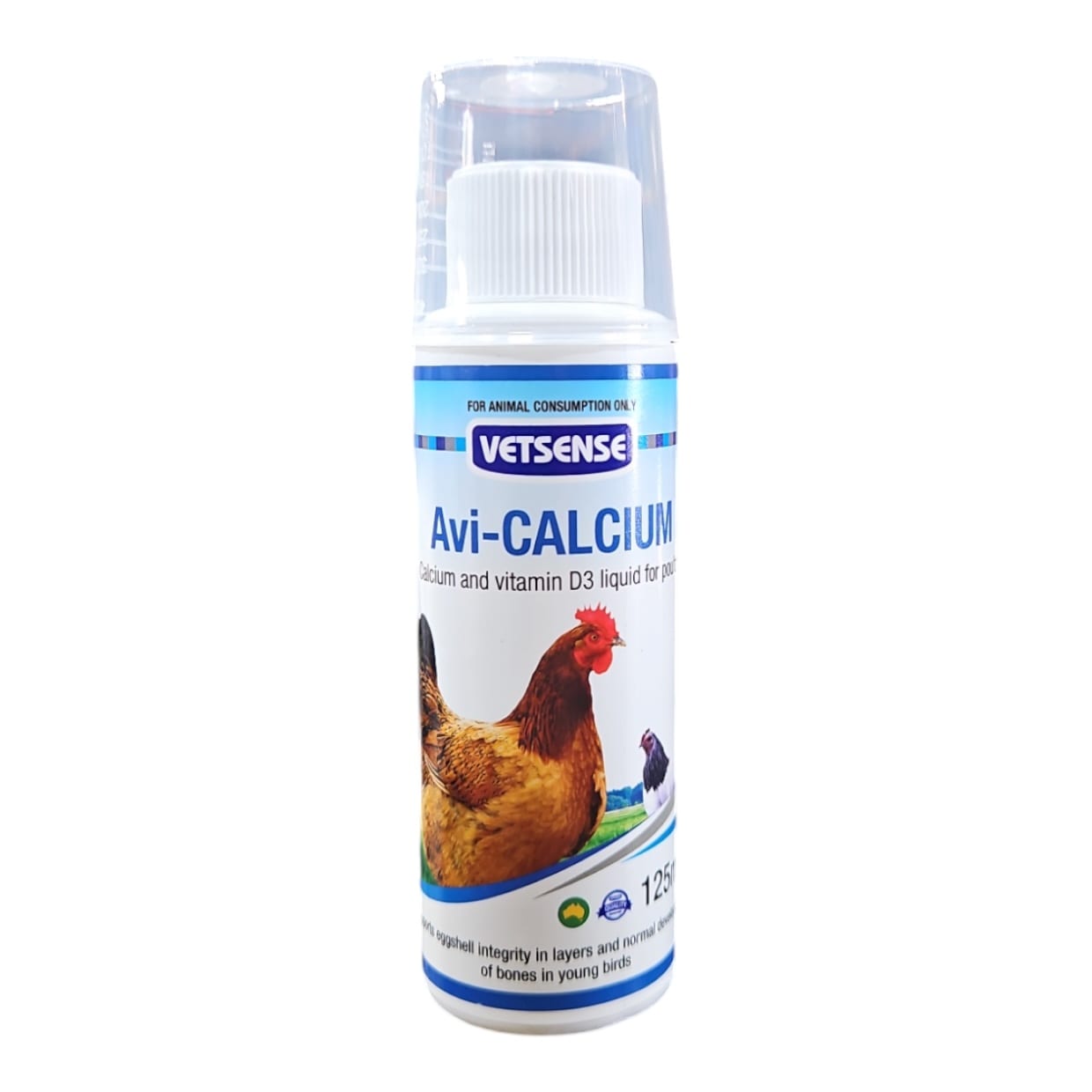

- Liquid calcium with vitamin D3 — mixes straight into the drinking water
- Supports eggshell integrity in layers and normal bone development in young birds
- Easy dosing for our drinkers: 16mL in the 2 Litre, 32mL in the 4 Litre (8mL per litre)
- The D3 is there for a reason — it helps the calcium actually absorb
- Labelled for chickens and birds — the same bottle serves the aviary
- 125mL bottle, from Vetsense (the company behind Kilverm)
- Liquid calcium + D3 — goes in the drinker
- For thin shells and growing birds
- 16mL in the 2L drinker, 32mL in the 4L
Liquid calcium, straight through the drinker
Every egg is built overnight, and the shell is nearly all calcium. When the feed isn’t keeping up — a heavy layer, a growing pullet, a long season — it shows up as thin, soft or ridged shells. Avi-CALCIUM is a liquid calcium and vitamin D3 supplement that goes straight into the drinking water, so the birds dose themselves every time they drink.
Not sure whether calcium is your problem? Start with our guide: calcium for chickens — recognise and avoid deficiencies.
When to reach for it
Thin, soft or rough shells — the classic sign a layer is drawing more calcium than she’s taking in.
Young birds building bone — the label’s second use, at the same weight-based rate. One caution that matters: more is not better for growing birds — read the FAQ before dosing chicks.
The aviary, not just the coop — it’s labelled for chickens and birds, so the same bottle covers budgies, pigeons and other birds dosed through their drinking water.
How to dose it
The mixing rate is 8mL per litre of drinking water — the label works from 4mL in 500mL of water for an average 2kg hen, and smaller birds simply drink less of the same mix. In our own drinkers, that comes out at:
| Drinker | Avi-CALCIUM per fill |
|---|---|
| Dine-A-Chook 2 Litre Drinker | 16mL |
| Dine-A-Chook 4 Litre Drinker | 32mL |
| Any other container | 8mL per litre of water |
Make the dosed drinker their only water for the day, and mix it fresh each day — a hen drinks roughly 250–500mL depending on her age and the weather, so the dose rides on her drinking.
The 125mL bottle is around eight fills of the 2 Litre drinker, or four of the 4 Litre.
Why the vitamin D3 matters
Calcium on its own is only half the job — a bird needs vitamin D3 to absorb it. That’s why the two are in the same bottle: 33mg of calcium per mL, with 25,000 i.u. of vitamin D3 alongside it, as listed on the label.
Works alongside
Shell grit is the everyday calcium — free choice at the feeder, the birds take what they need. The liquid is the water-dosed top-up for the times the shells say they need more.
Dosing a bigger flock? The D-3 Liquid Calcium in our range comes in 250mL and 1 litre. And for trace minerals rather than calcium — a different job — there’s Mega Mineral. The full vitamins and minerals range is here.
Specifications
| Size | 125mL bottle |
| Contains (per label) | Calcium 33mg/mL, vitamin D3 25,000 i.u. |
| Mixing rate | 8mL per litre of drinking water — the label works from 4mL in 500mL for an average 2kg hen (2mL per kilogram) |
| In our drinkers | 2 Litre Drinker: 16mL per fill · 4 Litre Drinker: 32mL per fill |
| How | Their only water for the day, mixed fresh daily |
| Suits | Chickens and birds — layers and the aviary; young birds per the label (see FAQ) |
| Storage | Below 30°C in a cool, dry place |
| Maker | Vetsense — the same company behind Kilverm |
Always read the label and follow the directions for use. If a bird is unwell, speak to a vet. For more on keeping a flock healthy, visit our Chook School.
Frequently Asked Questions
Shells, dosing and the calcium questions we get asked about laying hens.
How do I know my chickens need more calcium?
The shells tell you. Thin, soft, rough or ridged shells — or the occasional shell-less egg — are the classic signs a layer is drawing more calcium than she’s taking in. Heavy layers and birds late in a long season are the usual suspects. The full picture, including what to check before reaching for a supplement, is in our guide: calcium for chickens — recognise and avoid deficiencies. A bird that seems genuinely unwell, or is straining to lay, is one for the vet — not a supplement.
How much Avi-CALCIUM do I give?
Mix at 8mL per litre of drinking water — that’s 16mL in a Dine-A-Chook 2 Litre Drinker and 32mL in the 4 Litre. The label works from 4mL in 500mL of water for an average 2kg hen, and smaller birds simply drink less of the same mix. Make it their only water for the day and mix it fresh each day.
Shell grit or liquid calcium — which do I need?
They’re different jobs. Shell grit sits out free choice as the everyday calcium source — the birds help themselves. The liquid goes through the drinking water, so every bird gets it, on the days the shells say they need more. Plenty of keepers run grit year-round and add the liquid when thin shells show up.
Why is there vitamin D3 in it?
Because calcium on its own is only half the job — birds need vitamin D3 to absorb it. The bottle carries 33mg of calcium per mL with 25,000 i.u. of vitamin D3 alongside it, so the calcium you’re dosing is calcium the bird can actually use.
Can I use it for budgies, pigeons and other birds?
Yes — the “Avi” is for avian, and it’s labelled for chickens and birds. Because it doses through the drinking water, smaller birds take proportionally less by simply drinking less. Mix per the label, and for very small or unwell birds check with an avian vet first.
Is it OK for chicks and young birds?
Carefully — and it’s the right question to ask. Too much calcium genuinely harms birds that aren’t laying yet: a growing bird’s kidneys can’t shift the excess, and the damage builds quietly and shows up later. It’s the same reason chicks and pullets should never be raised on layer feed. The label does cover normal bone development in young birds, at its weight-based rate of 2mL per kilogram — treat that as a measured, short-term use with a reason behind it, never a routine addition. For chicks, a proper starter or grower feed already carries the right calcium; if you think a young bird needs more than that, ask a vet before supplementing.
What’s in it, and how do I store it?
Calcium at 33mg/mL and vitamin D3 at 25,000 i.u., as listed on the label. Store the bottle below 30°C in a cool, dry place — and always read the label and follow the directions for use.
Shells gone thin and not sure why? Get in touch — working out what a flock is missing is the phone call we take most in laying season.