


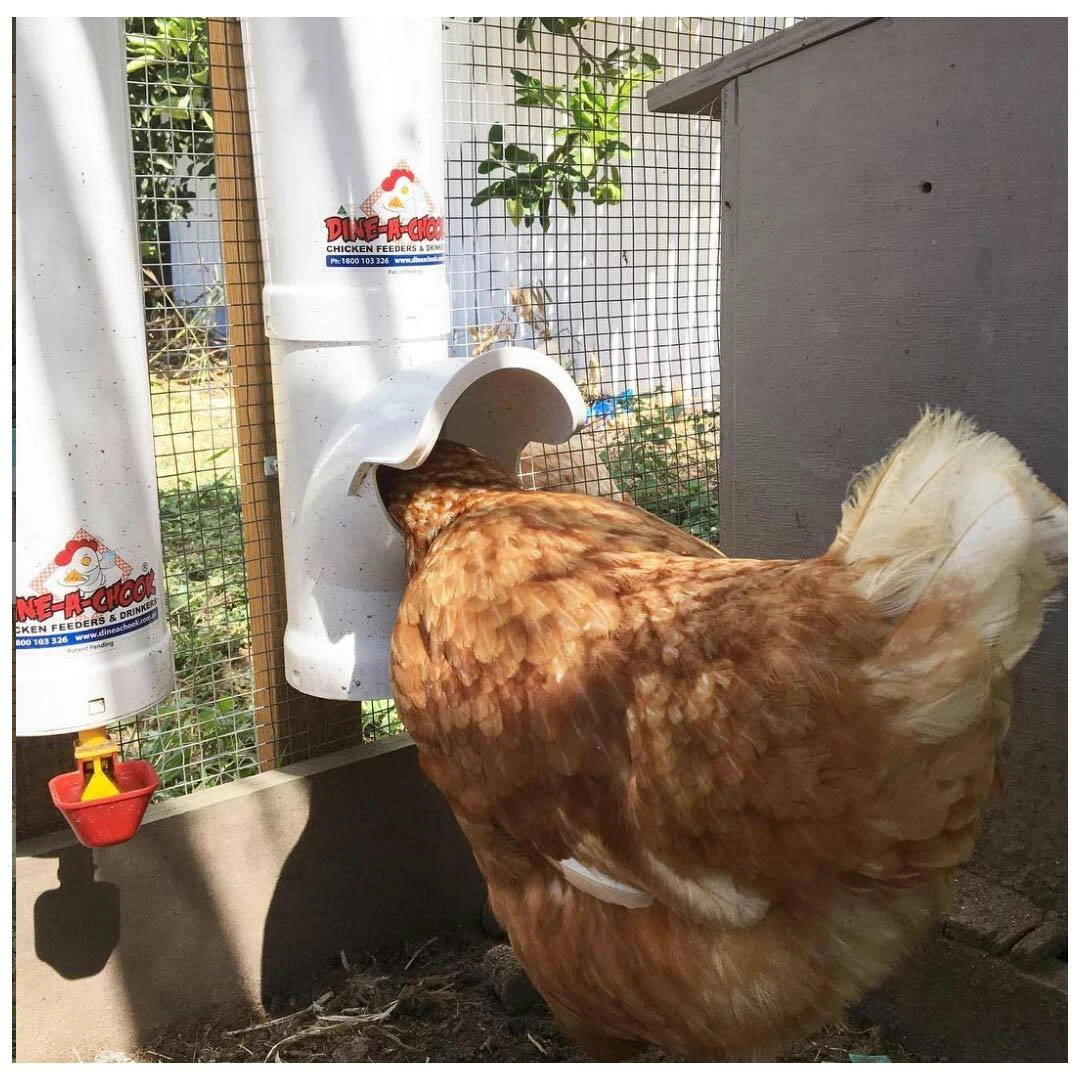

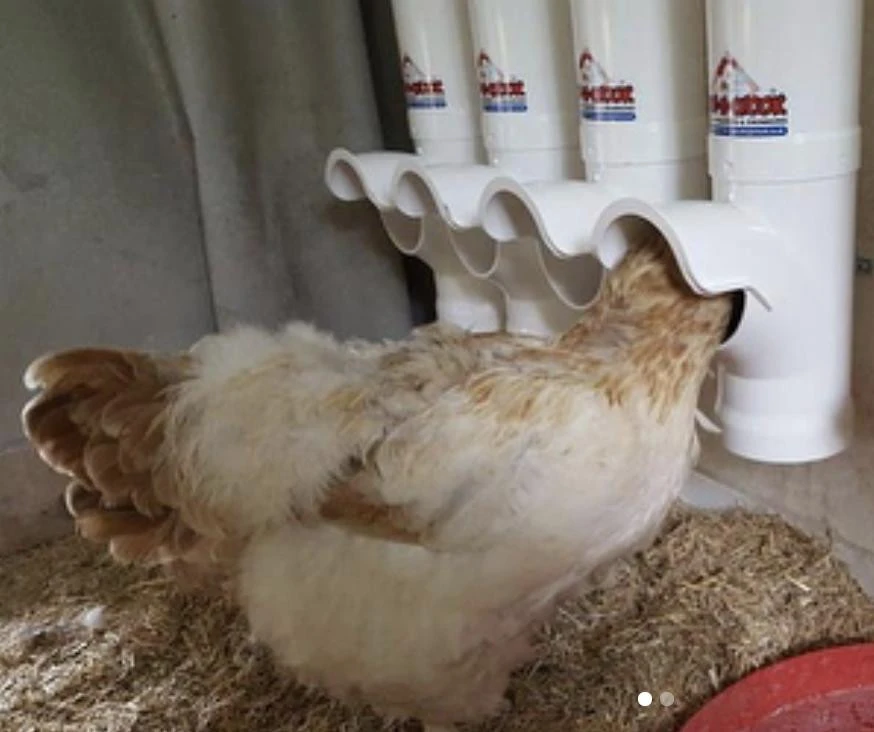


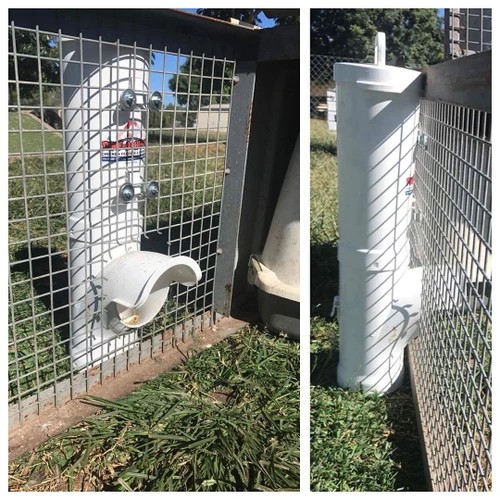
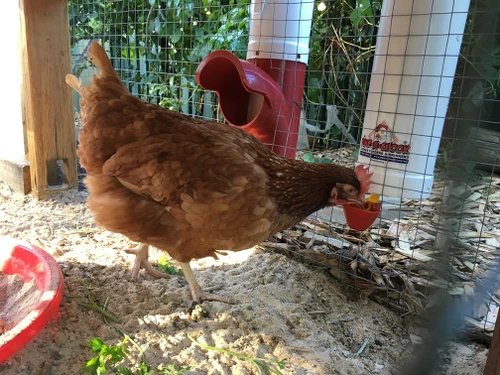



- The Small Feeder with the mounting hooks moved to the front — the hood passes through the coop wall and the body hangs outside
- Fill it from outside: no crawling into a low coop, no opening the run to top up feed
- Designed for flocks of 2–6 hens — roughly 7 days for a pair of hens, 5 days for a small flock
- Just 541mm tall — hangs neatly on a low outside wall where a taller feeder would stick up past the roofline
- Includes feeder, 2 brackets, 4 screws and installation guide — mounts to timber; Wire Mesh Mounting Kit for mesh walls
- Works best with quality complete feed (crumble or pellets) — balanced nutrition with less selective eating
- 3-year warranty — Australian made in Brisbane and Townsville
- Hooks on the front — mount through the wall, fill from outside
- Designed for flocks of 2–6 hens — compact 541mm body
- Same anti-waste hood, now inside the coop with the body outside
Fill the feeder from outside — even on a coop you can’t stand up in
Small coops are the ones that make you crawl. The door is knee-high, the feeder is at the back, and every refill means getting down in the litter. For years customers have asked us for a feeder they can fill from outside, and this is how we’ve been doing it: the Dine-A-Chook Small Feeder with the mounting hooks moved to the front. Everything else is the compact feeder that more than 80,000 Aussie chook keepers already know.
What’s different about the Front Hooks version?
On the standard Small Feeder the two mounting hooks are on the back, so it hangs flat against a wall inside the coop with the hood facing in. On this version the hopper is fitted the other way round, so the hooks sit on the same side as the hood. You fix the brackets to the outside of the wall, cut an opening for the hood, and the hood pokes through into the coop while the body, lid and handle stay outside with you. Same hopper, same hood, same capacity, same brackets. Just a different side to hang it from.
How do you mount it through the wall?
1. Pick the wall. An outside wall your hens can reach from inside, under the roofline if you have one. Mesh, tin, ply and timber sheeting all work; the thinner the wall, the more of the hood reaches inside.
2. Set the height. The bottom of the hood opening should line up with the back of a hen’s neck when she stands naturally, measured from the floor inside the coop.
3. Cut the opening. Hold the feeder against the outside of the wall at that height, trace around the hood, and cut just outside the line. Customers have been doing this for years without a template; it’s straightforward.
4. Fix the brackets to the outside face at the matching height. Timber takes the supplied screws; a mesh run needs the Wire Mesh Mounting Kit.
5. Feed the hood through and hang the feeder. Twist off the lid, fill, twist it back on. From then on the door stays shut.
Who it’s for
Flat-pack and hutch-style coops with a low door. Runs made from mesh panels where the feeder hangs straight off the outside of a panel. A couple of hens in a suburban backyard, filled on the way to the bin. At 541mm tall the Small Feeder sits under most low rooflines without poking above them, and the lid and handle stay out where you can reach them.
“Bought the 20 liter waterer and positioned outside the coop with the cup poking through the wire. Chickens took to it immediately.” — Claire, Perth, 2023
Everything else is the Small Feeder you know
Feed gravity-feeds into the hooded opening. The hood gives your hens room to eat comfortably, but its shape stops the raking and flicking that scatters feed onto the ground. No moving parts, no training — most chickens are eating within minutes. The 3.5L body holds roughly 2.6kg of feed, about 7 days’ worth for a pair of hens or around 5 days for a flock of six on quality complete pellets.
Mounted this way the hood opening sits inside the coop, under whatever cover the coop already has. The body outside is UV-resistant ASA plastic with a twist-on lid, so sun and rain on the outside of the tube are no problem. The built-in rain hood still channels water away from the opening. If the wall you choose cops driving horizontal rain, pick a more sheltered one — that’s the same advice we give for the standard feeder.
What’s in the box?
Feeder with twist-on lid, 2 steel mounting brackets, 4 self-tapping screws, and an installation guide. Mounts directly to timber — ready to install.
Mounting to wire mesh? You’ll need the Wire Mesh Mounting Kit (sold separately). Prefer to hang it inside the coop after all? The standard Small Chicken Feeder has the hooks on the back.
What feed works best with this feeder?
Works best with quality complete feed — crumble or pellets. These give your hens balanced nutrition in every bite and reduce selective eating. Grain mixes let hens pick their favourites and miss essential nutrients.
If the feed level looks low in the hood, that’s by design — it keeps feed away from the edges so your hens can’t flick it out. Try the finger test from inside the coop: push your finger into the opening. If you can move the feed, your chickens can reach it.
Why is the Small Feeder built to last?
Every component is injection moulded in Brisbane and assembled in Townsville — a genuine Australian made product. UV-resistant ASA plastic handles sun and rain year after year. No moving parts means nothing to jam, seize, or break. Backed by a 3-year warranty.
Pairs well with
Wire Mesh Mounting Kit
Stainless bolts and plates for hanging the feeder off a mesh run wall — the way most customers mount this version.
View Mounting Kit →Closure Cap
Seals the feeding opening overnight to help manage rodents and pests.
View Closure Cap →Large Feeder, Front Hooks
The same front-hook mounting on the larger feeder — suits flocks of 6–8 hens.
View Large Feeder, Front Hooks →Product Specifications
- Capacity:
- 3.5L (~2.6kg of feed)
- Suits:
- 2-6 hens
- Mounting:
- Front hooks - through the coop wall, filled from outside
- Height:
- 541mm
- Width:
- 127mm
- Weight:
- 1kg (empty)
- Material:
- UV-resistant ASA plastic
- Includes:
- Feeder, 2 brackets, 4 screws, installation guide
- Origin:
- Made in Australia
Frequently Asked Questions
The questions people ask before mounting a Small Feeder through the coop wall.
What is the Front Hooks version of the Small Feeder?
It’s the standard 3.5L Small Feeder assembled with the hopper reversed, so the mounting hooks are on the same side as the feed hood. Mount the brackets on the outside of the coop wall, pass the hood through a cut-out, and you fill the feeder from outside without opening the coop. Same compact body, same hood, same brackets, same warranty. The hopper is fixed at assembly, so it can’t be swapped between the two versions afterwards. You’ll also notice only two of the four collar clips lock in on this version; that’s how the hopper sits reversed, it’s assembled like that in Townsville, and it holds as it should.
What size opening do I cut for the Small Feeder hood?
There’s no set size to cut. Hold the feeder against the outside of the wall at the height you want, trace around the hood, and cut just outside the line. Start tight; it’s easy to open up and hard to close. On mesh panels you usually only need to snip a few wires.
Will the Small Front Hooks feeder mount to a mesh run?
Yes. That’s how most customers use it, straight off the outside of a mesh panel. Add the Wire Mesh Mounting Kit because the supplied screws are for timber; the kit’s stainless bolts and plates clamp the brackets to the mesh.
Is the feed protected from rain when the body hangs outside?
The opening the hens eat from is inside the coop, under the coop’s own cover. The body outside is UV-resistant ASA plastic sealed by the twist-on lid, and the built-in rain hood still channels water away from the opening. Pick the more sheltered wall if you have a choice; like the standard feeder, it isn’t built to defeat rain blown sideways in a storm.
How high should the Small Feeder opening sit inside the coop?
Bottom of the hood opening level with the back of your hen’s neck when she stands naturally, measured from the inside floor. Mark that height on the outside before you cut, because the brackets and the hole both follow it. Bantams and smaller breeds sit a little lower than a standard hen.
How long does the Small Front Hooks feeder last between refills?
Roughly 14 days for a pair of hens, 7 days for four, or about 5 days for six, based on ~90g per bird per day with quality complete pellets. More birds than that? The Large Feeder, Front Hooks holds 4.7L and suits 6–8 hens.
Are rats more of a problem with the feeder hanging outside?
No more than with an inside mount. The feeder is vermin-resistant, not vermin-proof: it keeps feed contained and off the ground, which takes away the main attraction. The lid seals the top outside, and the opening inside still takes a Closure Cap overnight. Persistent rodent problem? Ring 1800 103 326 and we’ll work through it with you.
Still not sure? Ring 1800 103 326 in Queensland business hours, or see the full feeder range.