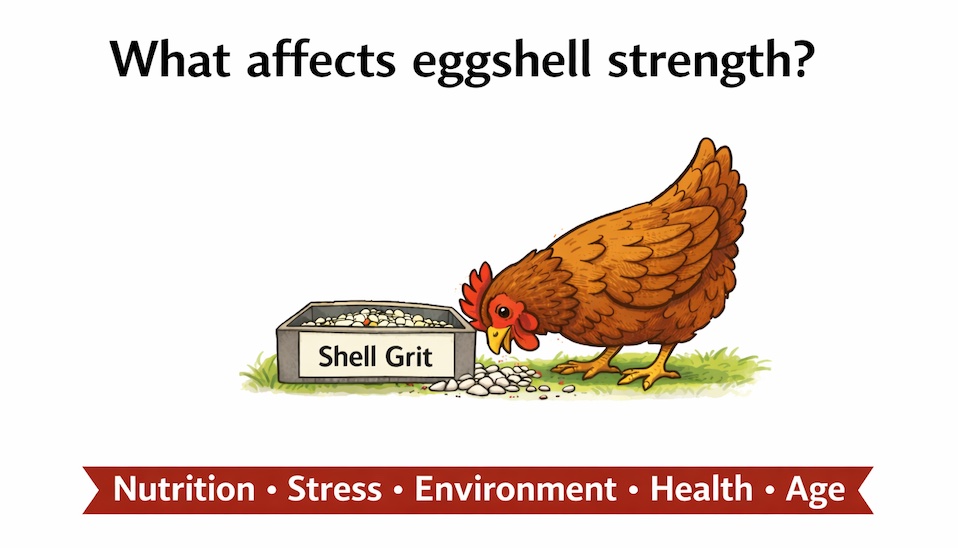
What Affects Eggshell Strength?
Factors affecting eggshell strength in chickens
If you’ve ever collected eggs with rough patches or shells that crack far too easily, you’re not alone. Eggshell quality is one of the most common concerns for backyard chicken keepers, and it’s influenced by far more than just “not enough calcium”.
Eggshell strength is one of the clearest indicators of a hen’s overall health. Thin shells, cracks and soft spots aren’t just inconvenient, they signal that something isn’t quite right.
While calcium is the most talked about factor, shell quality is influenced by a combination of diet, mineral balance, age, weather, stress and health. Understanding how these factors interact allows you to prevent problems before they show up in the nesting box.
Key takeaways
- Eggshell strength reflects overall hen health
- Overall calcium intake matters, but so does when calcium is available and in what form
- Calcium must be available overnight, so slow-release sources like Shell Grit are essential
- Stress, heat, age, illness and nutrient imbalance all weaken eggshells
- Consistent calcium availability and good management can prevent most shell problems in younger hens
- Shell weakness is unavoidable as hens age and is more pronounced in highly productive breeds
How an eggshell is formed
Egg formation takes about 25 hours in total. Shell formation is the last stage of this process and takes place in the shell gland, where eggs spend around 20 hours. Because hens typically lay early in the day, most eggshell formation takes place overnight.
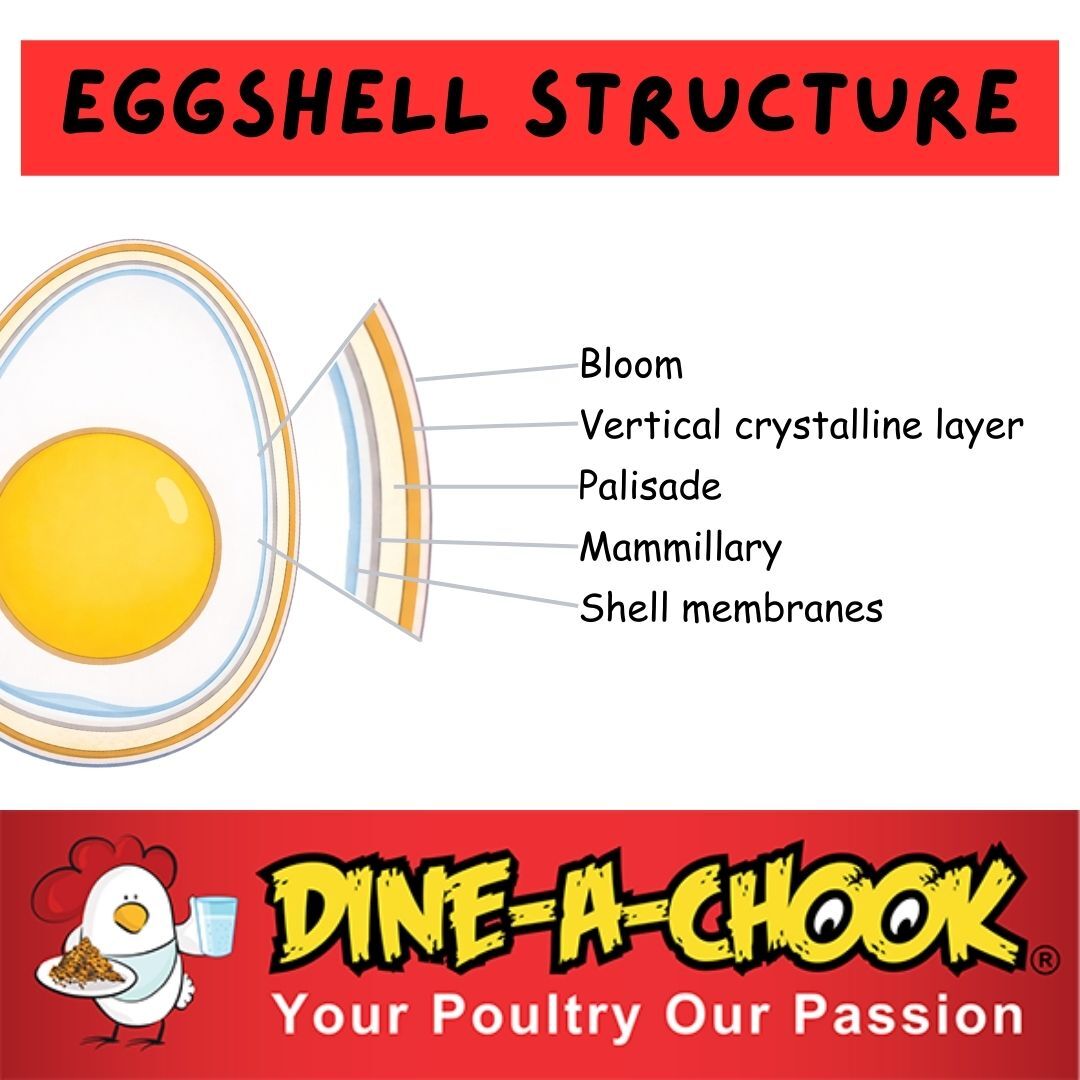
Eggshells are primarily made from calcium carbonate, deposited in layers over the membrane which contains the egg. Calcium, phosphorous, magnesium and other minerals are drawn from the hen’s bloodstream, digestive tract and bones. If anything interrupts the process of shell formation, such as stress, illness or other environmental factors, shell quality suffers.
Eggshells are about 40 % calcium in total. At the peak of eggshell formation, a hen is unable to absorb calcium from feed rapidly enough and so draws up to 40 % of the calcium in an eggshell from their bones. This is a normal process and hens have a special bone layer, medullary bone, for this purpose. Bone calcium is replaced though the diet but restoration is never 100 %, so a calcium-rich diet that ensures as much calcium as possible comes from the diet rather than bones, is essential for long-term hen health and eggshell strength.
Key factors that affect eggshell strength
While nutrition is key to eggshell strength, there are a range of factors that can impact shell formation and quality.
1. Calcium intake, timing and availability
Calcium is essential for eggshell formation. But how and when hens access calcium is just as important as how much they consume.
A calcium-rich diet is essential to provide as much of the calcium required for shell formation as possible, as well as to replenish bone calcium.
Hens need calcium in both small particle and large particle forms.
Small particle calcium
- Is also called fast-release calcium
- Is powdered or finely ground
- Is contained in chicken feed
- Available as a stand-alone supplement, either in liquid or powdered form, if needed
- Is absorbed quickly and used quickly in the body
- Provides calcium in the digestive tract and bloodstream
- Used for eggshell production and replenishing bone calcium
The calcium in a quality layer feed is usually sufficient small particle calcium for most hens. However, a calcium supplement can be helpful if birds are showing signs of calcium deficiency.
Large particle calcium
- Is also called slow-release calcium
- Is available through shell grit, oyster shell grit or limestone grit
- Breaks down gradually in the gizzard to supply calcium as needed
- Is essential for strong eggshells and very important for overnight eggshell production when hens aren't eating and less dietary calcium is available
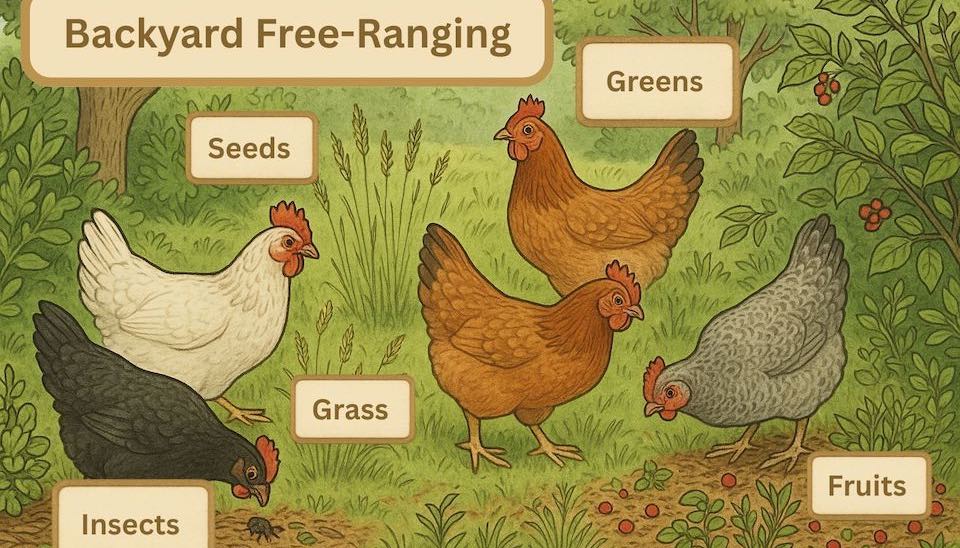
Shell grit should be provided free-choice and separate from feed. Hens will regulate their own intake andwill often consume shell grit before roosting. Even free range hens must have unlimited access to shell grit.
2. Phosphorus balance
Calcium doesn’t work alone: Phosphorous must be present in the correct ratio. Too little phosphorus leads to poor shell quality, while too much will block the absorption of calcium.
Phosphorous imbalance is not uncommon in backyard flocks and typically comes from supplementing a complete layer feed with grain, scratch mix or too many scraps and treats. Limiting additions to the diet can help prevent problems.
3. Vitamin D and sunlight
Without vitamin D, hens cannot absorb calcium.
Vitamin D usually comes from sunlight, and it is rare for backyard chickens to have a vitamin D deficiency except in latitudes where winter days are very short. But hens that are kept indoors or in a heavily shaded coop or run could be at risk.
Vitamin D deficiency typically shows up as thin or soft-shelled eggs despite adequate calcium.
4. Age
As hens age, eggs become larger but the amount of shell produced remains roughly the same. This means that shells become thinner and more fragile. While good nutrition, and particularly high calcium intake, will help, this is a normal biological process that cannot be avoided.
A further factor is skeletal calcium. It is unavoidable that laying hens will draw some calcium for eggshell production from their bones. Although this calcium is then replaced, even in ideal circumstances, bone calcium is depleted over time. This also makes thin-shelled eggs more common in older hens.
In highly productive breeds, such as ISA Browns and other commercial layers, weak shells caused by age can arise from 2-3 years.
While good nutrition throughout the lifespan, including plenty of calcium, can support eggshell strength in older hens, weakening eggshells are unavoidable as hens age.
5. Heat stress
Hens are very susceptible to heat stress, and it is one of the most common causes of weak eggshells.
When hens overheat, feed intake decreases and they consume less dietary calcium. In addition, panting alters blood pH and the mineral balance shifts, meaning less calcium is available.
Although providing plenty of shade and clean, cool water with added electrolytes can help, ultimately, there is little that can be done to prevent thin-shelled eggs during heat stress.
Learn how to help hens weather heat waves on the blog.
6. Stress and environmental factors
Stress directly interferes with egg formation, including shell development.
Common causes of stress in the chicken coop include:
- Predators
- Overcrowding
- Bullying
- Pecking order changes
- Poor diet
- Noise or handling
- Environmental factors such as rain, storms or heat
Stress can cause thin-shelled eggs or “repaired” eggs.
What is a "repaired egg"?
A repaired egg is an egg that appears cracked, usually around the middle, but the crack has been repaired. This is also called a “body-checked egg”.
A repaired egg occurs when an egg cracks while in the shell gland and is repaired. Repaired eggs are usually the result of a physical impact, such as a fall, collision or sudden movement. Stress, fright or collision with another egg in the oviduct are other causes.
Repaired eggs aren’t caused by calcium deficiency, but they are more common in hens with issues that result in a thin-shelled egg.
If you are seeing repaired eggs regularly, here are some of the more common causes in a backyard coop:
- Rough roosters
- Overly large roosters for the size of the hen
- Nesting boxes or roosts that are too high (hens shouldn’t jump down more than 1 metre)
- Nesting box shortages or other disturbances that cause a hen to hold an egg longer than normal
- A coop arrangement that means hens are likely to collide with a wall, drinker or another roost when jumping down from roosts or nesting boxes
7. Disease and parasites
Health issues that reduce feed intake or nutrient absorption, or that damage the reproductive tract, can affect shell quality. This includes:
- Internal parasites
- Chronic infections
- Reproductive tract inflammation
- Certain viral diseases, like infectious bronchitis, avian influenza and Newcastle disease
A sudden, flock-wide decline in eggshell strength, particularly in younger birds, warrants veterinary investigation.
8. Water quality and access
Shell formation isn’t just about diet. It also relies on proper hydration. Poor water access can reduce feed intake, increase stress and disrupt mineral balances. Clean, cool, fresh water is essential, especially during hot weather.
Preventing weak eggshells
Strong eggshells are built through consistent, long-term management. There are no quick fixes, and ultimately life-long calcium intake and health play a role in maintaining eggshell strength as a hen ages.
For strong eggshells:
- Feed a complete layer diet of a commercial feed and provide unlimited access
- Ensure adequate feeder and drinker space
- Avoid diluting nutrient intake with too many additional scraps and treats
- Keep phosphorus in balance by avoiding additional grains or scratch mix
- Provide access to fast-release calcium (provided in commercial layer feeds) and slow-release calcium (shell, oyster or limestone grit)
- Ensure hens have access to shell grit as well as insoluble grit, such as small stones
- Offer free-choice Shell Grit at all times so that hens can manage their own intake
- Never mix shell grit with feed and only use an additional calcium supplement if needed
- Ensure daily sunlight exposure
- Ensure hydration by providing clean, fresh, cool water
- Protect hens from stress
- Manage parasites and diseases
FAQ: Do calcium deficiencies cause weird eggs?
While weird eggs can have a range of causes, some eggshell issues are linked to calcium imbalance. Generally speaking, the odd eggshell abnormality is nothing to worry about. But frequent issues can be a sign of a problem.
Soft-shelled or shell-less eggs
Often caused by a temporary calcium deficiency, such as might result from heat stress, illness, a lack of large-particle calcium or a sudden increase in egg production.
Thin-shelled eggs
Associated with insufficient calcium or poor absorption, for example due to vitamin or mineral imbalance. Thin-shelled eggs become more common as hens age and are also more common in highly productive breeds.
Wrinkled or corrugated shells
Often result from inconsistent calcium availability, such as a lack of shell grit in the gizzard to release calcium overnight, but can also be linked to stress or shell gland disruption.
Rough or pimpled eggshells
Often due to uneven calcium distribution on the shell. Can be the result of excess calcium in the diet, stress or other causes.
Body-checked (repaired) eggs
Shell damage which occurs inside the hen and is repaired before laying is most often caused by stress or rough treatment. However, it is more common in hens with a calcium deficiency.
Learn more on the blog:
- Weird eggs and what causes them
- Managing calcium in the chicken coop
- Should you feed eggshells to chickens?
Happy chicken keeping!
Rachael at Dine-A-Chook Australia