







- Chelated mineral supplement — nutrients instantly available to the bird
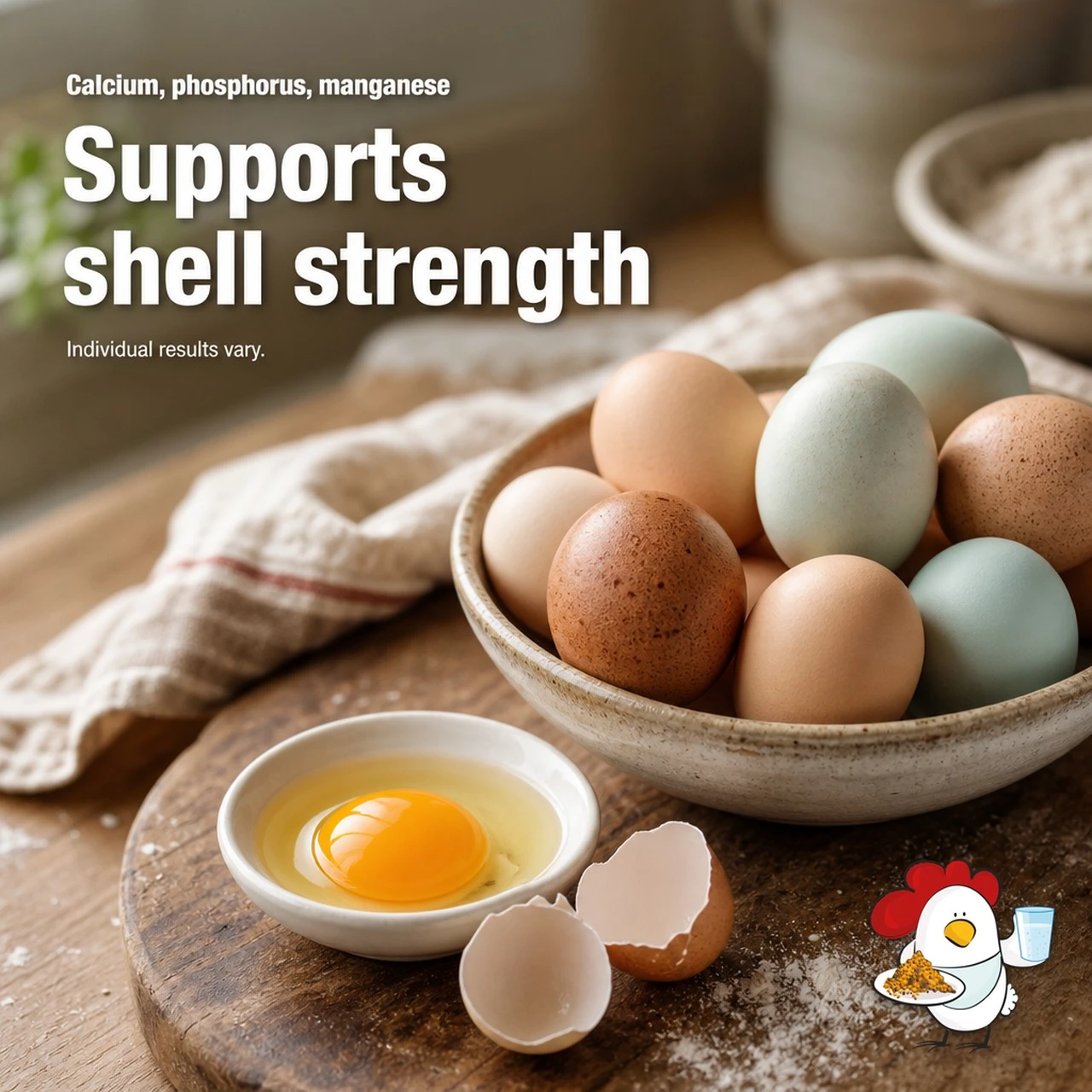
- Supports stronger egg shells, feather condition and overall flock health
- Ideal during moulting, stress or recovery periods
- 250ml concentrated formula — simply mix into drinking water as directed
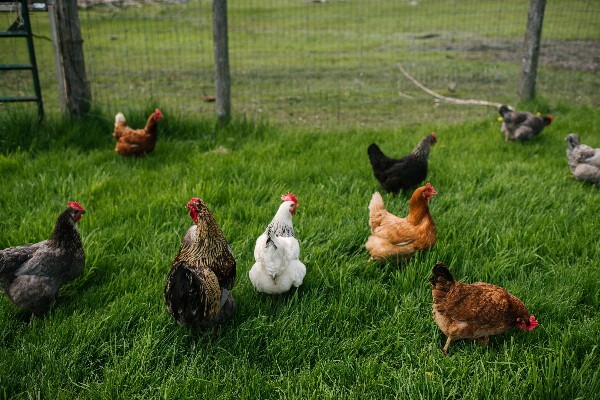
- Suitable for backyard flocks of all sizes
- Australian made and backed by real local support
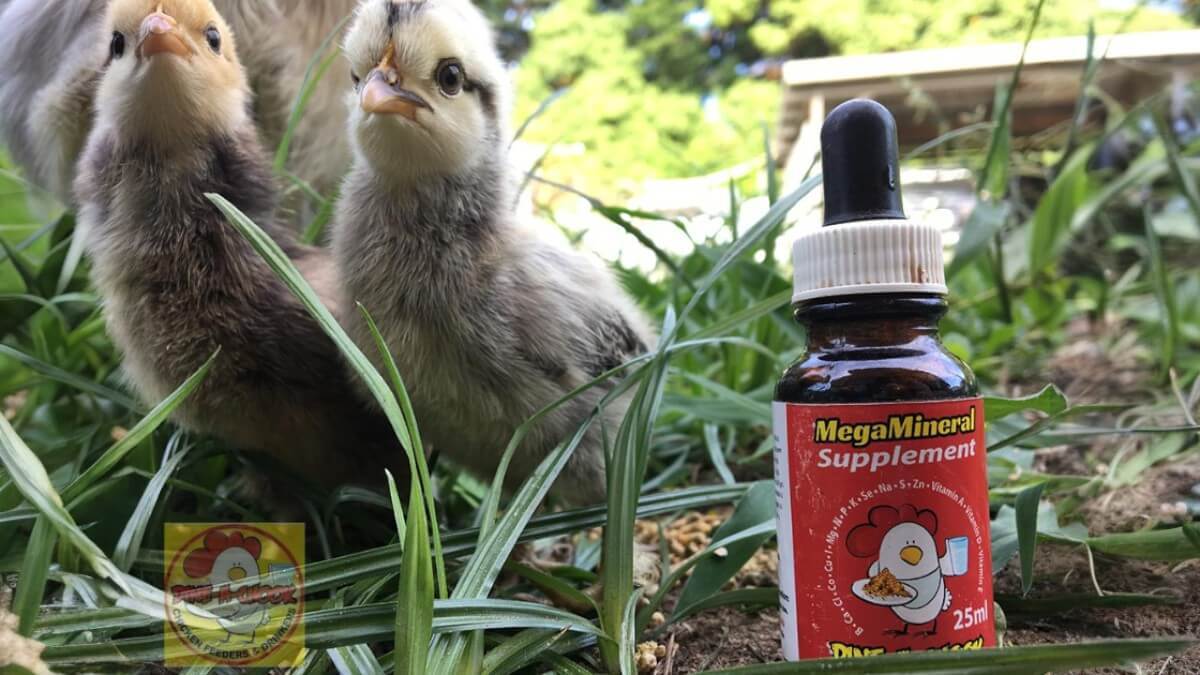
- 250ml chelated mineral supplement
- Nutrients instantly available to the bird
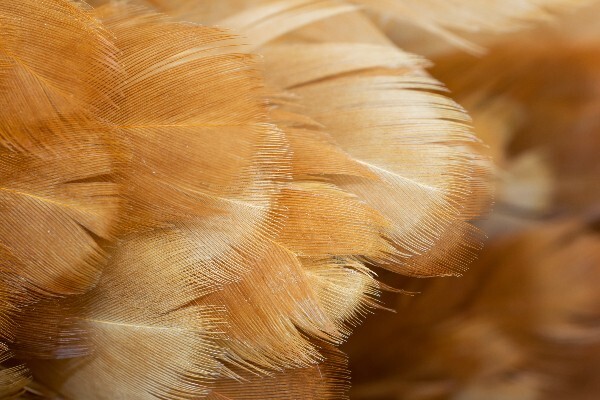
- Supports shell strength & feather condition
- Easy to mix into drinking water
The daily supplement for backyard flocks that actually lasts
You've invested in good layers. You feed them well. You keep their coop clean. But if you've ever wondered why your hens' feathers aren't quite as glossy as they should be, or why some shells crack a bit too easily — the answer might be hiding in plain sight.
Australian soils are naturally low in trace minerals. That means the grains in your chickens' feed are too — no matter how premium the brand.
Why laying hens need more than just good feed
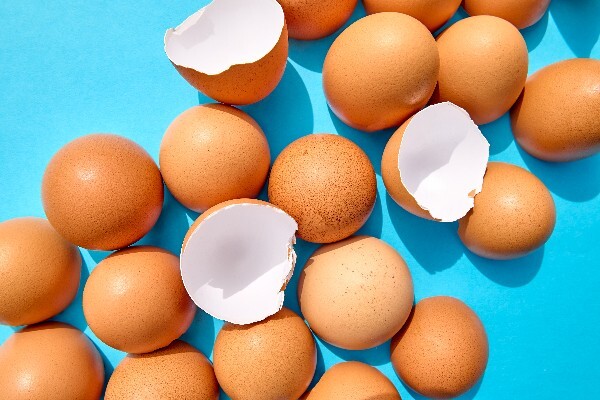
Every egg your hen produces draws on her body's mineral reserves — calcium for the shell, zinc and manganese for shell structure, phosphorus for strength. When those reserves run low, you see it in shell quality first. Then feather condition. Then energy levels.
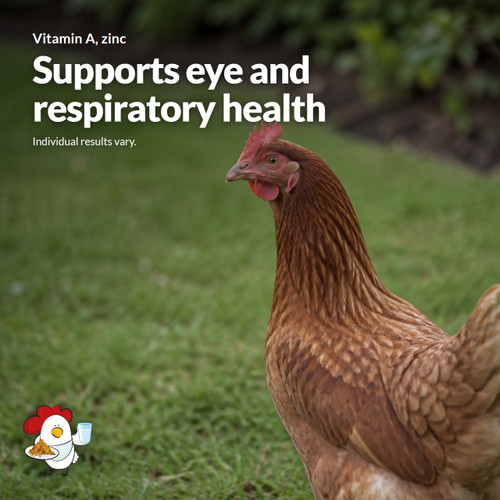
The problem is, most commercial feeds can only contain what's in the soil the grains grew in. And Australian soils are notoriously mineral-depleted — particularly in selenium, zinc, and copper.
Mega Mineral fills that gap. A few drops in their water each day, and you're giving your flock the trace minerals their feed can't provide.
250ml — The sweet spot for backyard flocks
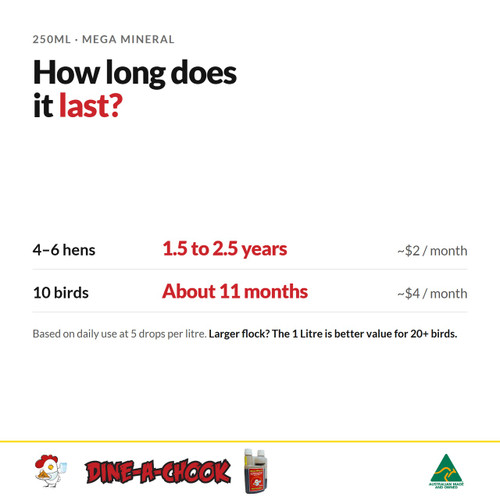
For a typical flock of 4–6 laying hens, this bottle lasts 1.5 to 2.5 years.
That's around $2 per month for daily mineral support — less than a single bag of treats.
Chelated minerals: What that actually means
Not all supplements are created equal. Many mineral products pass straight through without being absorbed — wasted money and no benefit.
Chelated minerals are bonded to amino acids — molecules the body already knows how to absorb. The minerals hitchhike into the bloodstream instead of passing through unused.
This is called bioavailability. It's why chelated supplements work at lower doses — and why a few drops per litre is all your hens need.
What healthy mineral levels support
Each trace mineral plays a specific role in your laying hens' everyday health.
How to use
During moult • Hot weather stress • Recovery from illness • Peak laying season • New birds settling in
What's inside
How long will this bottle last?
Based on daily use at 5 drops per litre.
Larger flock? The 1 Litre bottle is better value for 20+ birds.
Available sizes
This listing is for the 250ml bottle. Click above to view other sizes.
Not just for chickens
If you keep other poultry or animals alongside your hens, they can share the same supplement.
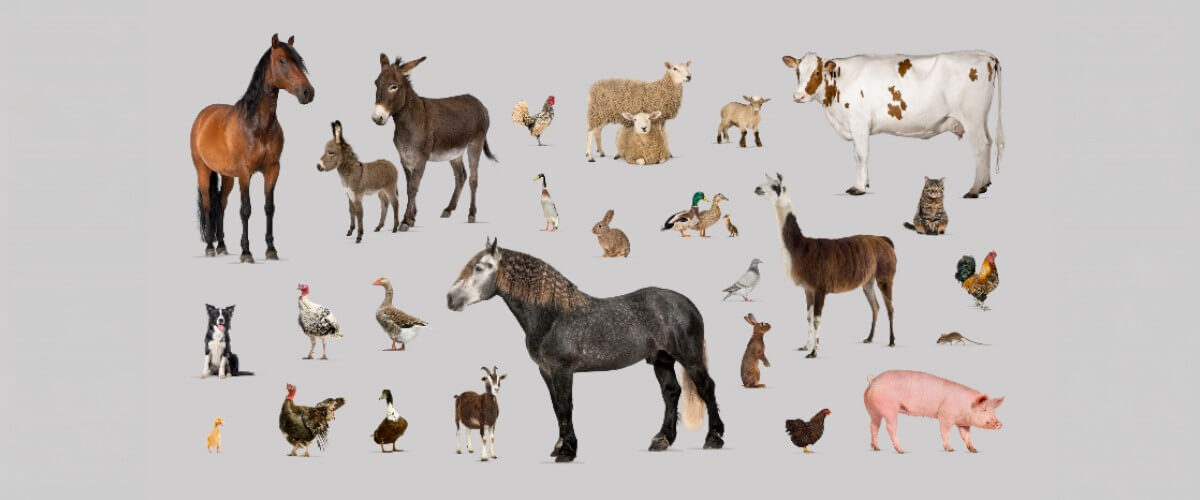
4–5 drops per litre
2–3 drops per litre
6–8 drops per litre
1–2ml per day
3ml per day
Contact us if you'd like guidance for a specific animal or situation.
Specifications
| Size | 250ml |
| Bottle material | HDPE plastic |
| Dispenser | Squeeze cap |
| Dosage | 4–5 drops per litre of water |
| Approximate yield | ~5,000 drops |
| Shelf life | 24 months from manufacture |
| Storage | Cool, dry place away from direct sunlight |
| Suitable for | All poultry and livestock |
Daily care that lasts for years
For a typical backyard flock, this 250ml bottle provides 1.5 to 2.5 years of daily mineral support — at around $2 per month.
Chelated for absorption. Australian made. Trusted by 50,000+ customers.
Questions? 1800 103 326 — we're here to help.
Product Specifications
- Size::
- 250ml
Frequently Asked Questions
Common questions from backyard chicken keepers.
My hens are already on layer feed – do they still need this?
Layer feed is formulated to meet basic nutritional needs, but it can only contain what was in the ingredients – and Australian grains are grown in mineral-depleted soils. If your hens also get treats, scraps or free-range time, which dilutes their feed intake, they may not be getting their full mineral quota. Mega Mineral fills those gaps.
Will this help with soft or thin egg shells?
Shell problems are often linked to mineral imbalance. Calcium gets the attention, but your hens also need phosphorus and manganese to utilise calcium properly, plus zinc for shell membrane formation. Mega Mineral provides all of these. If shell grit alone has not solved the problem, adding trace minerals to the water is a sensible next step. Individual results vary.
How is this different from shell grit?
Shell grit provides calcium only. Mega Mineral provides 16 trace minerals and vitamins that support the whole bird – feathers, immune function, energy, and shell formation too. They complement each other. Keep offering shell grit for calcium, and add Mega Mineral to their water for everything else.
Will it affect the taste of my eggs?
No. The minerals support your hens rather than ending up in the eggs in any way you would taste. Over time some keepers report more consistent shell quality and richer yolk colour – vitamin A and selenium both play a role in yolk quality – though individual results vary.
How long until I see results?
It depends on what deficiencies exist in the first place. Shell changes can sometimes show within a couple of weeks. Feather condition usually takes longer, around four to eight weeks, because feathers grow slowly. The real benefit is long term: consistent daily minerals mean your hens are not constantly depleting their reserves.
Is it safe to use while my hens are laying eggs I eat?
Yes. There is no withholding period. Mega Mineral contains naturally sourced trace minerals – the same minerals found in healthy food – and it is designed for daily, ongoing use in laying flocks.
What does “chelated” mean in plain English?
Chelated minerals are bonded to amino acids, which are protein building blocks the body already knows how to absorb. Instead of passing through unused, as many cheaper supplements do, chelated minerals are absorbed into the bloodstream where they can do their job. It is why the dose is small: 4–5 drops per litre is enough.
How long will a 250ml bottle last?
For a typical flock of 4–6 laying hens, around 1.5 to 2.5 years – about $2 a month. For 10 birds it is roughly 11 months, or about $4 a month. If you keep 20 or more birds, the 1 Litre bottle works out better value.
Is it Australian made?
Yes. Manufactured in Australia. Dine-A-Chook is an Australian family business based in Queensland, helping backyard chicken keepers since 2009.
Still have questions? Call us on 1800 103 326 – we are real people who keep chickens too.