



- 237ml ready-to-use spray — nothing to mix, nothing to dilute
- For external use on poultry
- Hypochlorous acid 0.013%. No alcohol, antibiotics, steroids or dyes
- Label states no egg withdrawal period
- pH balanced, non-stinging, and safe around the head and if pecked
- Spray directly from the bottle. No rinsing off afterwards
- Imported into Australia by Dine-A-Chook
- 237ml ready-to-use spray
- External use on poultry
- No alcohol, antibiotics or steroids
- No mixing, no rinsing
Helps maintain cleanliness and promotes natural recovery
That is how Vetericyn describe it on the Australian label, and it is a fair summary of what the bottle is for.
There is no measuring, no dilution and no mixing. You take the cap off, spray, and put it back on the shelf. That matters when you are holding a bird with one hand.
It is a topical spray for external use, and it does not need rinsing off afterwards.
How to use it
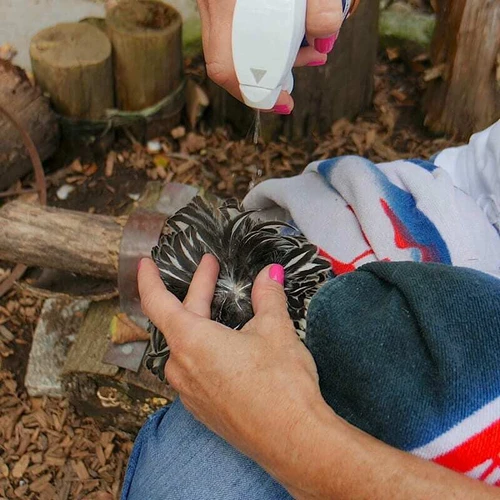
- Part the feathers so you can see the skin you are aiming at
- Hold the bottle upright, about 5 to 10cm away
- Spray directly onto the area until it is wet
- Leave it. Do not rinse it off
- Reapply through the day as often as you need to
- Safe for use around the head and sensitive areas, and safe if it is pecked or ingested — so you are not fighting the other birds off while you work
- Repeat 3 to 4 times a day, or as often as you need to
- Clear the feathers away from the area first, and clip them if you need to
- A second pair of hands makes it far easier. Wrapping the bird loosely in a towel, head covered, helps too
- Evening, when birds are settled and about to roost, is the easiest time
Vetericyn make a separate ophthalmic wash if you want something specifically for the eye itself. This one is not sold as an eye rinse — but the safety data sheet records eye contact as non-irritant and non-toxic, so a stray bit of overspray near her face is not something to panic about.
External use only. Read the label and follow the directions on it.
What is in it, and what is not
| Active | Hypochlorous acid 0.013% |
| Other | Electrolyzed water, sodium chloride, pH buffering agents |
| pH | 6.2 to 7.2 |
That is the whole formula. It is a clear liquid with a faint chlorine smell. No alcohol, no antibiotics, no steroids, no harsh chemicals and no dyes — so it will not stain her feathers.
The label states: no antibiotics or egg withdrawal period.
The manufacturer’s safety data sheet for this range records it as not hazardous to humans or animals, with no regulated components, and records skin, eye, inhalation and ingestion contact as non-irritant and non-toxic. Oral LD50 is greater than 5,000 mg/kg.
In practice that is why it does not sting, and why birds tolerate it being reapplied several times a day.
How far does a bottle go?
237ml is a lot of spray for a backyard flock, because you are only ever wetting a small area at a time. Most keepers buy one bottle, use it occasionally, and still have it on the shelf a long time later. Keep the cap on and store it out of direct sunlight.
Good husbandry comes first
- Keep the coop clean, dry and well ventilated
- Separate any bird that is unwell or being picked on by the others
- Check your birds regularly, so you notice things early rather than late
If you are worried about a bird, speak to a vet. This is not a substitute for veterinary care.
We import it ourselves
Dine-A-Chook is the Australian importer, so it comes to you from a shed in Townsville rather than the other side of the world. We are a small Australian family business and we have been supplying backyard keepers since 2009 — and we answer our own emails if you have a question about it.
What people usually keep alongside it
- VetRx — the most common thing bought with it
- David Grays Poultry Dust
- Apple Cider Vinegar with Garlic
- 25ml Mega Mineral
Specifications
| Size | 237ml (8 fl oz) |
| Packaging | Trigger spray bottle |
| Preparation | Ready to use. No mixing or dilution |
| Use | External use only. Safe around the head and sensitive areas |
| If pecked or ingested | Safe |
| Frequency | 3 to 4 times a day, or as needed |
| Composition | Hypochlorous acid 0.013% in electrolyzed water. pH 6.2-7.2 |
| Birds | All bird species, all life stages |
| Made in | USA, using foreign and domestic components |
| Rinsing | Not required |
| Egg withdrawal period | None, per the label |
| Free from | Alcohol, antibiotics and steroids |
| Suitable for | Chickens and other feathered birds |
| Storage | Room temperature, out of direct sunlight and heat. Do not freeze. Turn the nozzle to STOP after use |
External use only, not for injection. Animal use only, not for humans. Keep out of reach of children. Stop using it and contact your veterinarian if her skin reacts or she becomes unwell. Read the label and follow the directions before use.
Product Specifications
- Size:
- 237ml
- Packaging:
- Spray Bottle
Frequently Asked Questions
The questions we actually get asked about using it.
Does it need mixing or diluting?
No. It is ready to use straight from the bottle. Take the cap off and spray — there is nothing to measure and nothing to prepare.
Do I need to rinse it off afterwards?
No. Spray it on and leave it. You can reapply through the day as often as you need to.
Does it sting?
No. It is pH balanced between 6.2 and 7.2, and the manufacturer’s safety data sheet records it as non-irritant and non-toxic on skin. That is why birds generally tolerate being sprayed and re-sprayed without much fuss. Going slowly and having a second pair of hands still helps.
Can I spray it on her face and around the eyes?
Yes. The label states it is safe for use around the head and sensitive areas, and the manufacturer's safety data sheet records eye contact as non-irritant and non-toxic — it simply says to flush with water if you want to. So working around her face is not a problem, and a bit of overspray is nothing to panic about.
Vetericyn do make a separate ophthalmic wash if you want something intended specifically for the eye itself. This one is not sold as an eye rinse.
Can I use it on other birds, not just chickens?
It is intended for external use on feathered birds — keepers use it on ducks, turkeys, geese, bantams and guinea fowl as well as chickens. Read the label and follow the directions on it.
What is actually in it?
The active is hypochlorous acid at 0.013%. Everything else is electrolyzed water, sodium chloride and pH buffering agents, giving a pH of 6.2 to 7.2. That is the whole formula — no alcohol, no antibiotics, no steroids, no dyes. Made in the USA.
We eat the eggs. Is that a problem?
The label states there is no egg withdrawal period, and that it contains no antibiotics. It is for external use only, and contains no alcohol, steroids or dyes. Read the label and follow the directions on it. If you still have a concern about your eggs, ask your vet — that is the right person to answer it for your situation.
How long does a 237ml bottle last?
A long time for a backyard flock. You are only ever wetting a small area at a time, so most keepers buy one bottle, use it occasionally and still have it on the shelf much later. Keep the cap on and store it out of direct sunlight.
How do I hold the bird while I spray?
Wrap her loosely in a towel with her head covered — birds settle quickly once they cannot see. Part the feathers with one hand, spray with the other, and do it in the evening when they are calm and about to roost. A second person makes it much easier.
Can I buy it in Australia?
Yes. Dine-A-Chook is the Australian importer, so it ships from us here in Queensland rather than from overseas. We have been supplying backyard keepers since 2009.
Should I still call a vet?
Yes, if you are worried about a bird. This is not a substitute for veterinary care or for good husbandry. Keep the coop clean and dry, separate any bird that is unwell or being picked on, and get professional advice when you need it.
Got a question we have not answered? Get in touch — we answer our own emails.