Chicken Feeders
Australian Made, Waste-Reducing Design

Dine-A-Chook chicken feeders were designed in 2009 to help reduce feed waste, mess and rodent attraction — starting with our own backyard flock. If you're tired of soggy feed, scattered grain and constant refilling, this is where most backyard keepers start.
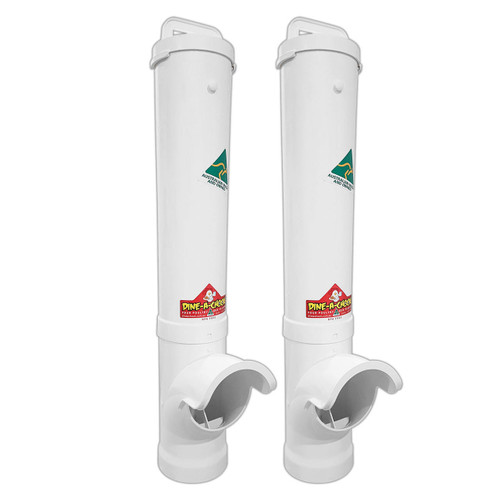
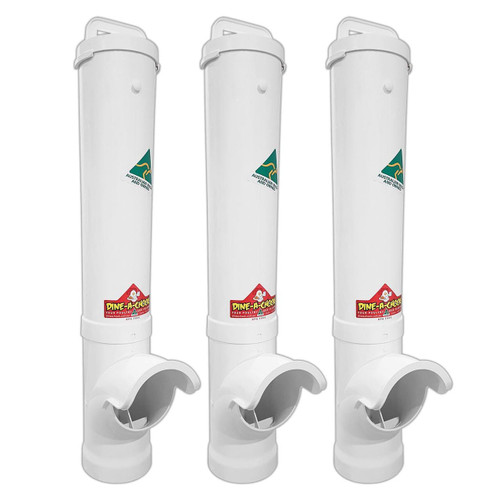
This page shows our full range of chicken feeders — small and large sizes, single units and multi-packs — all using the same proven waste-reducing design. Built for Australian conditions and trusted by 50,000+ customers across Australia, New Zealand and the UK.
How it works | Why it's different | Which feeder do I need? | Feeder & drinker sets | Installation | FAQs
Chicken Feeder Comparisons
Most chicken feeders are designed for convenience, not performance. Here's how Dine-A-Chook compares:
A True 'No Waste' Chook Feeder
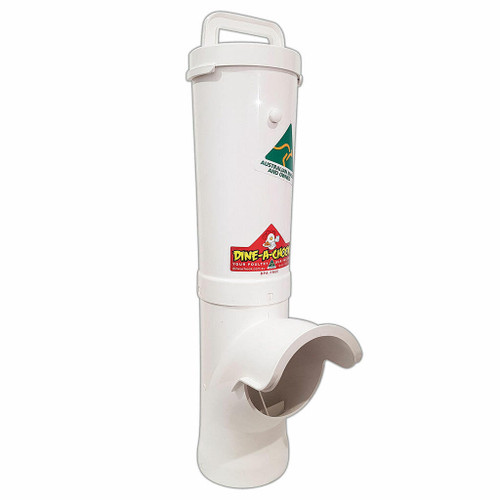
Our patented design controls natural chicken behaviour — without moving parts
- Vertical divider — helps limit side-to-side raking
- Horizontal paddles — help prevent forward pulling and flicking
- Recessed feeding bay — chickens put their head inside to eat, so scattered feed stays in the feeder
- Angled rain hood — helps keep weather out while still allowing easy access
Most flocks adapt quickly. Cautious birds can take a little longer — especially if they’ve been bowl-fed.
What You Get With Every Dine-A-Chook Feeder
- Reduced feed waste — designed to keep feed off the ground and where your chickens can eat it
- Cleaner feeding area — less scattered feed around the coop
- Helps deter pests — less spillage means less reward for rats, mice, and wild birds
- Helps keep feed drier — enclosed bay and rain hood help protect feed in normal rain
- Fewer refills — choose a size and pack that matches how often you want to top up
- Built to last — UV-stabilised plastic for outdoor use
Which Chicken Feeder Do I Need?
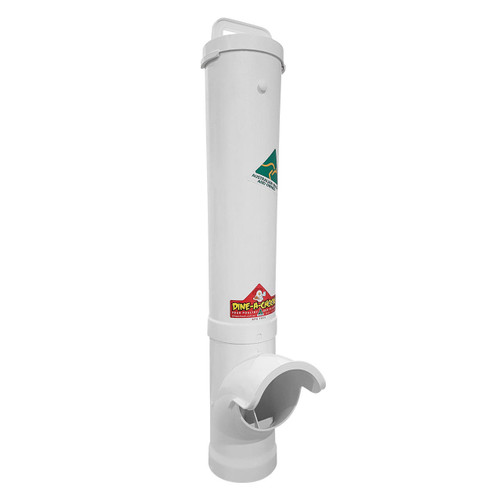
We make two sizes: the Small Feeder (3.5L) and the Large Feeder (4.7L). Both use the same waste-reducing design — the main difference is capacity.
If your coop has enough height clearance, the Large Feeder is usually the better-value option because it holds more feed and needs refilling less often.
The Small Feeder is ideal for lower coops, chicken tractors, or compact setups where mounting height and refill access are limited.
Use the quick guide below to choose by flock size. For larger flocks, multiple feeders spaced around the coop often work better than one oversized feeder — it helps reduce bullying and keeps feed fresher.
*Feed use and refill timing vary depending on breed, diet, season, and how much your hens free-range.
Colour Options
Our feeders come in white (standard), red, or red and white. Same design, same performance — just pick your preference.
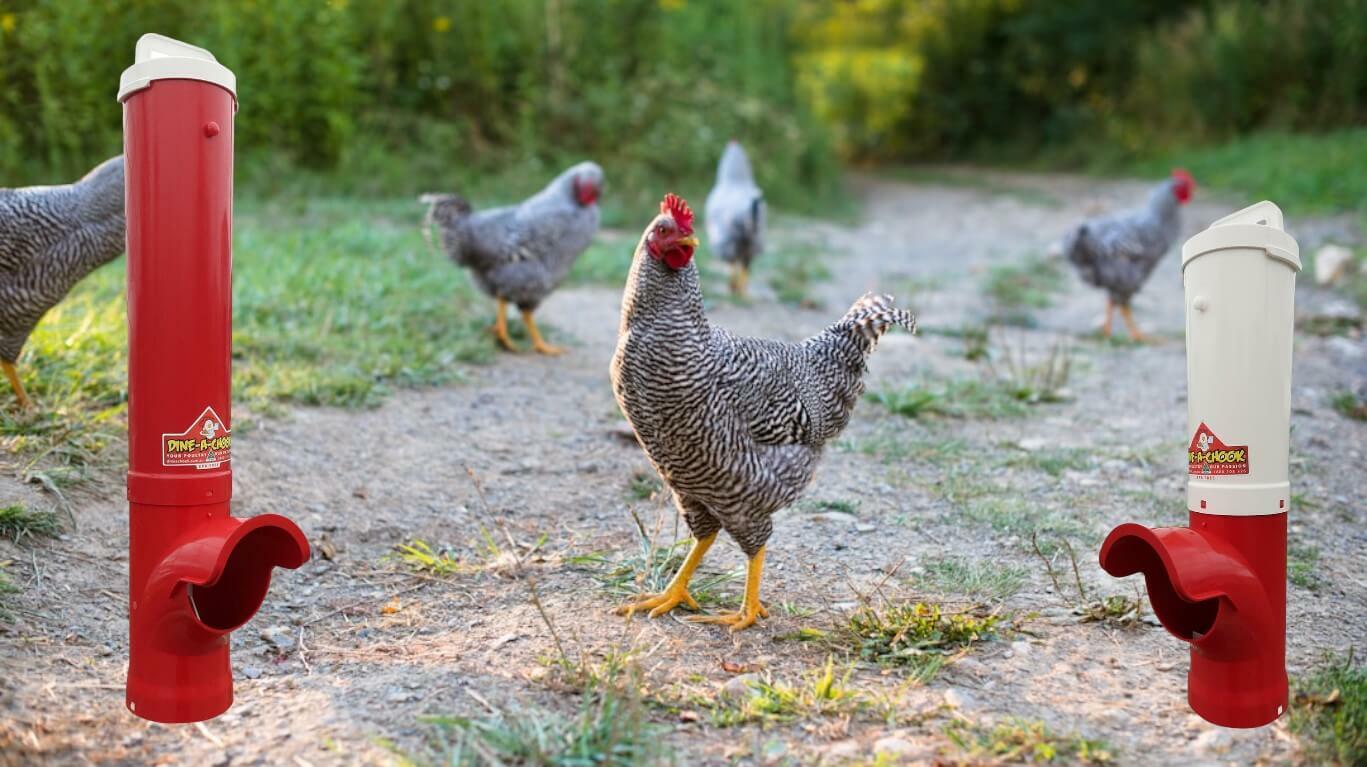
Red & White — Small (3.5L)
Red & White — Large (4.7L)
Red — Large (4.7L)
The Chicken Feeder That Took 15 Years to Perfect
In 2009, we built our first chicken feeder by hand in a Townsville garage. We had one goal: stop the waste, mess, and frustration that comes with feeding chickens.
Fifteen years and 50,000+ customers later, the Dine-A-Chook Feeder is trusted by backyard keepers across Australia, New Zealand, and the UK. Every feeder is manufactured in Brisbane from UV-stabilised ASA plastic and assembled by hand in our Townsville warehouse.
We Filmed What Actually Happens When Chickens Eat
Early on, we mounted GoPro cameras inside chicken coops and recorded hours of footage. What we saw changed everything we thought we knew about feeder design.
Chickens don't eat neatly. They rake — sweeping their beaks side to side. They pull — dragging feed forward. They select — picking out favourites and scattering the rest.
Any feed exposed near an edge ends up on the ground. That’s why open troughs, hanging feeders, and many “gravity” styles waste feed — they're designed for how we think chickens eat, not how they actually behave.
Feeder & Drinker Sets
Setting up a new coop? Our matched feeder and drinker sets give you everything you need in one order.
Installation
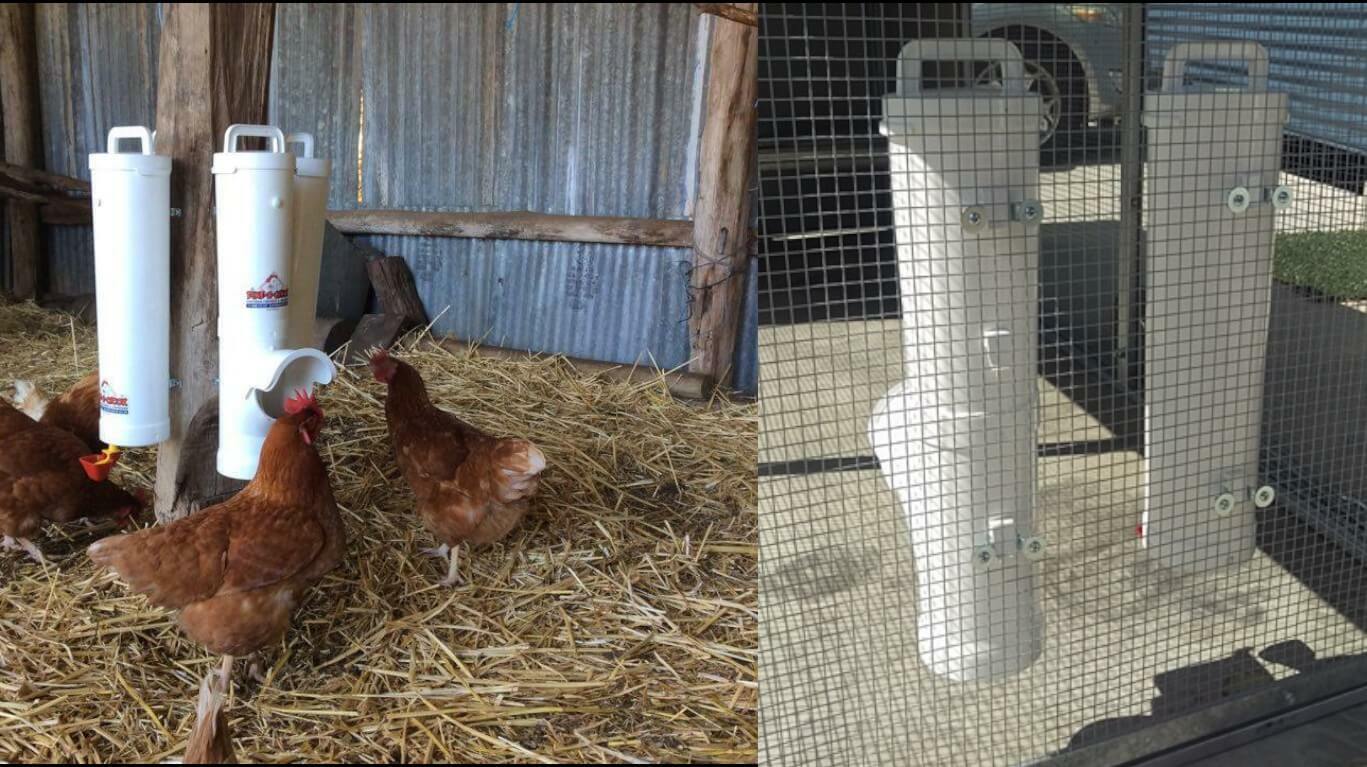
Every feeder comes with steel mounting brackets and screws. Installation takes about five minutes:
- Mount vertically on any solid surface — timber, sheet metal, or masonry
- Mounting height is best set by your birds: align the feeding bay with the back of your chicken’s neck when standing naturally
- For wire mesh coops, use our stainless steel wire mesh mounting kit
View full installation guide →
“The feed looks low” — that’s normal
New customers sometimes think the feeder isn’t working because they can’t see much feed in the bay. That’s actually by design.
If you can put your finger in and move the feed around, your chickens can access it easily. Keeping feed away from the edge helps reduce flicking and waste.
Frequently Asked Questions
What size feeder do I need?
For up to 4 hens, the Small Feeder (3.5L) is a great starting point. For 6–8 hens, the Large Feeder (4.7L) is usually ideal. If you have enough height clearance in your coop, the large feeder is often the better-value option because it holds more feed. Lower coops, compact setups and chicken tractors are where the small feeder often makes more sense.
Is it really rat-proof?
We say vermin-resistant, not vermin-proof — because nothing is truly rat-proof. The design makes it much harder for rats and mice to access feed compared to open feeders, and it helps reduce attraction by eliminating scattered feed. If you already have an established rodent problem, you’ll still need trapping or baiting as well.
Will my chickens actually use it?
Most chickens work it out quickly. Some cautious birds can take a little longer, especially if they’ve been bowl-fed. A simple tip: remove other feed sources and give them time to adapt — once one bird starts using it, the rest usually follow.
What type of feed works best?
Quality complete feeds such as crumble and pellets flow most consistently and reduce selective eating. Avoid wet feeds, fermented feeds, or feeds containing molasses in humid conditions — these can clump and restrict flow.
How do I clean it?
The base cap unscrews for cleaning access. Most feeders don’t need frequent cleaning with good-quality feed, but it’s worth inspecting periodically and cleaning as needed with warm soapy water.
How long will it last?
Our feeders are made from UV-stabilised ASA plastic designed for outdoor use. With normal use, they’re built to last for years in Australian conditions.
Ready to Stop Wasting Feed?
Join 50,000+ chicken keepers who've switched to Dine-A-Chook. Australian made, built to last, and backed by people who actually answer the phone.
Need Help Choosing?
Not sure which feeder suits your setup? We’re happy to help.
- Phone: 1800 103 326 (business hours)
- Email: support@dineachook.com.au
Dine-A-Chook chicken feeders were designed in 2009 to help reduce feed waste, mess and rodent attraction — starting with our own backyard flock. If you're tired of soggy feed, scattered grain and constant refilling, this is where most backyard keepers start.
This page shows our full range of chicken feeders — small and large sizes, single units and multi-packs — all using the same proven waste-reducing design. Built for Australian conditions and trusted by 50,000+ customers across Australia, New Zealand and the UK.
How it works | Why it's different | Which feeder do I need? | Feeder & drinker sets | Installation | FAQs
Chicken Feeder Comparisons
Most chicken feeders are designed for convenience, not performance. Here's how Dine-A-Chook compares:
A True 'No Waste' Chook Feeder
Our patented design controls natural chicken behaviour — without moving parts
- Vertical divider — helps limit side-to-side raking
- Horizontal paddles — help prevent forward pulling and flicking
- Recessed feeding bay — chickens put their head inside to eat, so scattered feed stays in the feeder
- Angled rain hood — helps keep weather out while still allowing easy access
Most flocks adapt quickly. Cautious birds can take a little longer — especially if they’ve been bowl-fed.
What You Get With Every Dine-A-Chook Feeder
- Reduced feed waste — designed to keep feed off the ground and where your chickens can eat it
- Cleaner feeding area — less scattered feed around the coop
- Helps deter pests — less spillage means less reward for rats, mice, and wild birds
- Helps keep feed drier — enclosed bay and rain hood help protect feed in normal rain
- Fewer refills — choose a size and pack that matches how often you want to top up
- Built to last — UV-stabilised plastic for outdoor use
Which Chicken Feeder Do I Need?
We make two sizes: the Small Feeder (3.5L) and the Large Feeder (4.7L). Both use the same waste-reducing design — the main difference is capacity.
If your coop has enough height clearance, the Large Feeder is usually the better-value option because it holds more feed and needs refilling less often.
The Small Feeder is ideal for lower coops, chicken tractors, or compact setups where mounting height and refill access are limited.
Use the quick guide below to choose by flock size. For larger flocks, multiple feeders spaced around the coop often work better than one oversized feeder — it helps reduce bullying and keeps feed fresher.
*Feed use and refill timing vary depending on breed, diet, season, and how much your hens free-range.
Colour Options
Our feeders come in white (standard), red, or red and white. Same design, same performance — just pick your preference.
Red & White — Small (3.5L)
Red & White — Large (4.7L)
Red — Large (4.7L)
The Chicken Feeder That Took 15 Years to Perfect
In 2009, we built our first chicken feeder by hand in a Townsville garage. We had one goal: stop the waste, mess, and frustration that comes with feeding chickens.
Fifteen years and 50,000+ customers later, the Dine-A-Chook Feeder is trusted by backyard keepers across Australia, New Zealand, and the UK. Every feeder is manufactured in Brisbane from UV-stabilised ASA plastic and assembled by hand in our Townsville warehouse.
We Filmed What Actually Happens When Chickens Eat
Early on, we mounted GoPro cameras inside chicken coops and recorded hours of footage. What we saw changed everything we thought we knew about feeder design.
Chickens don't eat neatly. They rake — sweeping their beaks side to side. They pull — dragging feed forward. They select — picking out favourites and scattering the rest.
Any feed exposed near an edge ends up on the ground. That’s why open troughs, hanging feeders, and many “gravity” styles waste feed — they're designed for how we think chickens eat, not how they actually behave.
Feeder & Drinker Sets
Setting up a new coop? Our matched feeder and drinker sets give you everything you need in one order.
Installation
Every feeder comes with steel mounting brackets and screws. Installation takes about five minutes:
- Mount vertically on any solid surface — timber, sheet metal, or masonry
- Mounting height is best set by your birds: align the feeding bay with the back of your chicken’s neck when standing naturally
- For wire mesh coops, use our stainless steel wire mesh mounting kit
View full installation guide →
“The feed looks low” — that’s normal
New customers sometimes think the feeder isn’t working because they can’t see much feed in the bay. That’s actually by design.
If you can put your finger in and move the feed around, your chickens can access it easily. Keeping feed away from the edge helps reduce flicking and waste.
Frequently Asked Questions
What size feeder do I need?
For up to 4 hens, the Small Feeder (3.5L) is a great starting point. For 6–8 hens, the Large Feeder (4.7L) is usually ideal. If you have enough height clearance in your coop, the large feeder is often the better-value option because it holds more feed. Lower coops, compact setups and chicken tractors are where the small feeder often makes more sense.
Is it really rat-proof?
We say vermin-resistant, not vermin-proof — because nothing is truly rat-proof. The design makes it much harder for rats and mice to access feed compared to open feeders, and it helps reduce attraction by eliminating scattered feed. If you already have an established rodent problem, you’ll still need trapping or baiting as well.
Will my chickens actually use it?
Most chickens work it out quickly. Some cautious birds can take a little longer, especially if they’ve been bowl-fed. A simple tip: remove other feed sources and give them time to adapt — once one bird starts using it, the rest usually follow.
What type of feed works best?
Quality complete feeds such as crumble and pellets flow most consistently and reduce selective eating. Avoid wet feeds, fermented feeds, or feeds containing molasses in humid conditions — these can clump and restrict flow.
How do I clean it?
The base cap unscrews for cleaning access. Most feeders don’t need frequent cleaning with good-quality feed, but it’s worth inspecting periodically and cleaning as needed with warm soapy water.
How long will it last?
Our feeders are made from UV-stabilised ASA plastic designed for outdoor use. With normal use, they’re built to last for years in Australian conditions.
Ready to Stop Wasting Feed?
Join 50,000+ chicken keepers who've switched to Dine-A-Chook. Australian made, built to last, and backed by people who actually answer the phone.
Need Help Choosing?
Not sure which feeder suits your setup? We’re happy to help.
- Phone: 1800 103 326 (business hours)
- Email: support@dineachook.com.au