Scaly Leg Mites - Natural treatment for Chicken Leg Mites
Chicken leg mites: Scaly leg mite treatment and symptoms
Scaly leg mites are a common parasite infecting chickens, poultry and birds. They cause irritation, itching and inflammation on chicken's legs and feet. If left untreated, scaly leg mites can lead to infection and lameness.
→ Shop poultry lice and mite products
Symptoms of scaly leg mites:
Have you ever noticed that chicken's legs are actually covered in scales?
A healthy chicken's legs look smooth, like the belly of a snake. The scales are visible but sit relatively flat, like a skin.
A chicken with scaly leg mites has really obvious scales. Its legs and feet will look thick and crusted, like the skin of a warty crocodile or toad.
Symptoms of chicken leg mites include:
- Inflammation of the legs and feet
- Thick, crusted feet and legs
- Scabs or raised scales on the legs and feet
- Flaking scales (early symptom)
- Raised scales
If scaly leg mites are not treated, a chicken's legs and feet will become so inflamed that the chicken may become lame, suffer from infection or lose parts of their feet.
Like all parasites, scaly leg mite symptoms will be worse in chicken's with lower immune systems, for example those on the bottom of the pecking order or suffering from deficiency, illness or parasites.
What causes scaly legs in chickens?
It is natural for chickens to have smooth scales on their legs. But crusty, raised scales are caused by a parasite called a scaly leg mite.
Scaly leg mites live on chicken legs. They tunnel under the scales and into the skin, eating the flesh and leaving droppings that cause irritation.
Chickens may get scaly leg mites from another flock member or from wild birds.
Unfortunately, scaly leg mites spread easily in the chicken coop. If one chicken is infected, all of your flock will have scaly leg mites and need to be treated. You must also disinfect your coop to prevent reinfection.
How to deal with scaly leg mites
Scaly leg mites are as easy to recognise as they are stubborn to shift.
Most approaches focus on suffocating the mites under the scales. Whatever you use, it has to be repeated, because suffocation does not destroy mite eggs sitting under the skin. Expect it to take several weeks, and expect to treat every bird in the flock rather than only the obvious cases.
There are veterinary products registered for lice and mites on poultry - dusts, sprays and some dewormers. Read the label before you use anything. Many carry a withholding period for eggs or meat, and not every product on a shelf is registered for use on birds whose eggs you eat. If you are unsure which product suits your situation, or the bird is badly affected, ask your vet. It is a parasite, and a vet can tell you what you are actually dealing with.
How NOT to treat chicken leg mites
There are lots of poultry forums and online articles that recommend dangerous home treatments for scaly leg mites. You should avoid the following chicken leg mite treatments:
- Petrol
- Paraffin oil
- Kerosene
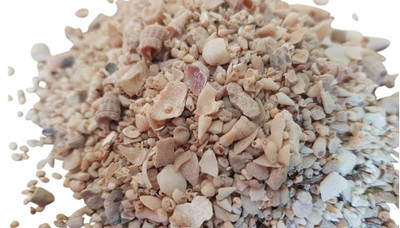
- Diatomaceous earth
- Garlic cloves in the water
- Crisco
- Vegetable oil
- WD40
Using chemical products like petrol, kerosene and WD40 is likely to be painful for chickens, particularly if the skin is already inflamed. Chemicals also have the potential to be absorbed into the skin or swallowed while pecking or grooming, causing health issues and potentially contaminating meat and eggs.
Diatomaceous earth (DE) can be used to treat the coop for mites but will not work on birds as it is unlikely to penetrate the chicken's leg scales.
Garlic cloves are also safe, but there is no evidence to suggest that eating or drinking garlic has any effect on chicken parasites.
Preparing the legs properly
Whatever product you go on to use, the preparation is the same, and doing it properly makes a real difference. The crust is what protects the mites, so getting it off first matters.
- Soak the feet and legs of the bird in warm water for 5-10 minutes.
- Scrub the feet and legs very gently with a soft toothbrush to remove dead skin and crusty build-up. Be careful - the skin underneath is often inflamed and sore.
- Dry the feet and legs.
- Apply your chosen product as directed on its label.
- Repeat as the label directs. Because unhatched eggs sit under the skin, a single application is rarely enough, and a case of scaly legs can take several weeks to resolve.
Treat all of the birds in your flock initially. After the first round, repeat treatment can be limited to birds still showing symptoms.
Handle the birds gently and do this in the evening if you can, when they are calmer and about to roost.
Do not forget the coop
Treating the birds and leaving the coop alone is the most common reason scaly leg mites come straight back.
- Clean the coop out thoroughly after treating the birds - litter, nesting boxes and perches.
- Pay particular attention to perches and to cracks and joins in the timber, which is where mites shelter.
- Treat the coop with a product registered for that purpose, such as Coopex Insecticide, and follow the label directions.
- Keep the coop dry. Damp litter makes every parasite problem harder to shift.
- Repeat the coop clean when you repeat the birds, so you are not reinfesting them.
When to involve a vet
- The legs are badly swollen, cracked or bleeding
- The bird is limping or reluctant to walk
- There is no improvement after a few weeks of consistent treatment
- The bird has stopped eating or drinking, or is sitting fluffed up
- You are not sure whether what you are looking at is mites at all
Preventing it coming back
Scaly leg mites usually arrive on a new bird or from wild birds, and they take hold fastest in coops that are damp, crowded or overdue for a clean.
- Quarantine new birds for two to three weeks before they join the flock, and check their legs while you have them.
- Check legs regularly as part of your routine - flaking scales are the early sign and are far easier to deal with than a crusted leg.
- Keep litter dry and the coop well ventilated.
- Do not overcrowd. Close contact is how it moves through a flock.
- Keep feed contained so wild birds are not sharing the run. A covered feeder that keeps feed off the ground gives them less reason to come in.
→ Shop poultry lice and mite products
In the Dine-A-Chook Range
Both of these are registered products. Poultry Dust is used on the birds; Coopex is used on the coop and its surfaces, not on birds.
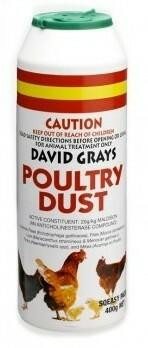 $29.95 | 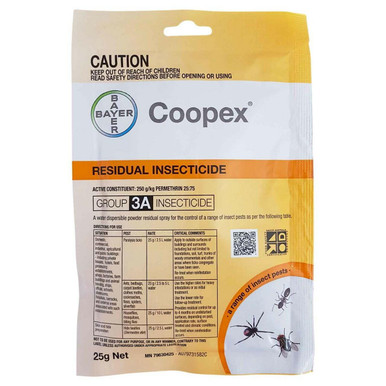 $16.95 |
Read the label and follow the directions before use.