

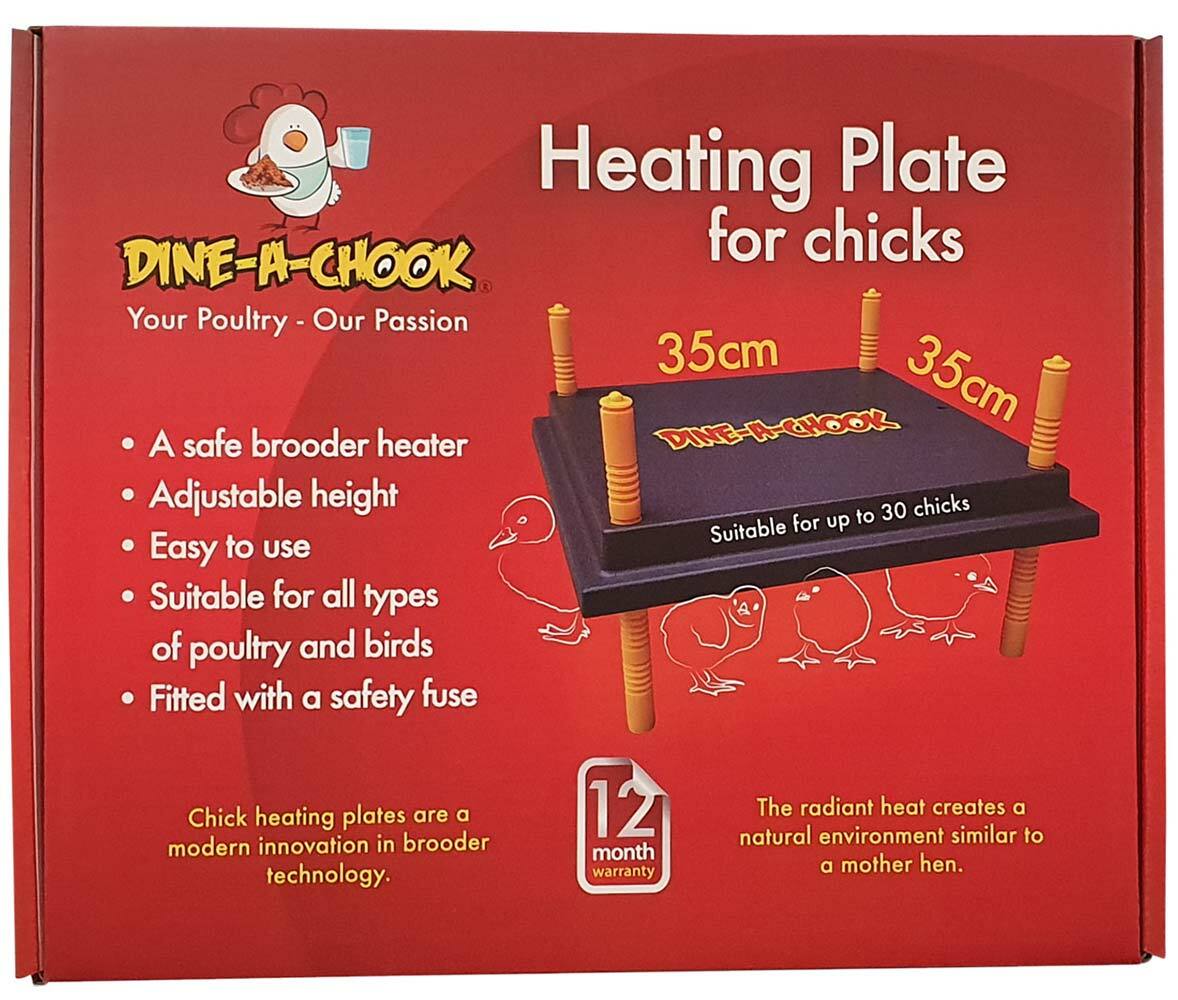


- 30 W radiant heat plate, 35 x 35 cm — for up to 30 chicks
- Independently certified to the Australian electrical safety standards (RCM, Global-Mark 510491)
- Warmth from above, the way a hen does it. No bulb, no light, chicks sleep in the dark
- Four height-adjustable legs, about 5–15 cm, raised as they grow
- Used on a surge protection device, the one condition of the warranty
- Suits chicks, bantams, quail, ducklings and goslings. 12-month warranty
- 30 W, 35 x 35 cm, up to 30 chicks
- Warmth from above like a hen. No bulb, no light
- Adjustable legs, about 5–15 cm
- Certified to Australian standards (RCM). Use on a surge protector
Warmth from above, the way a hen does it
A hen does not heat the room. She sits, and the chicks tuck in underneath her and come out when they are warm. A heat plate works the same way: a warm underside on four adjustable legs, the chicks go under it when they want heat and step out when they do not, and they sleep in the dark like they would under a hen.
The 30 W plate is 35 x 35 cm, sized for up to 30 chicks in a medium brooder. It draws 30 watts, plugs into an ordinary Australian socket, and the chicks work it out within minutes.
Tested and certified for Australia
Independently certified to AS/NZS 60335.2.71, the Australian safety standard for heating appliances that rear animals. RCM mark on the plate, Global-Mark certificate 510491, our name on the label. Comparing plates on price? Ask each seller for their certificate number.
Setting it up takes ten minutes
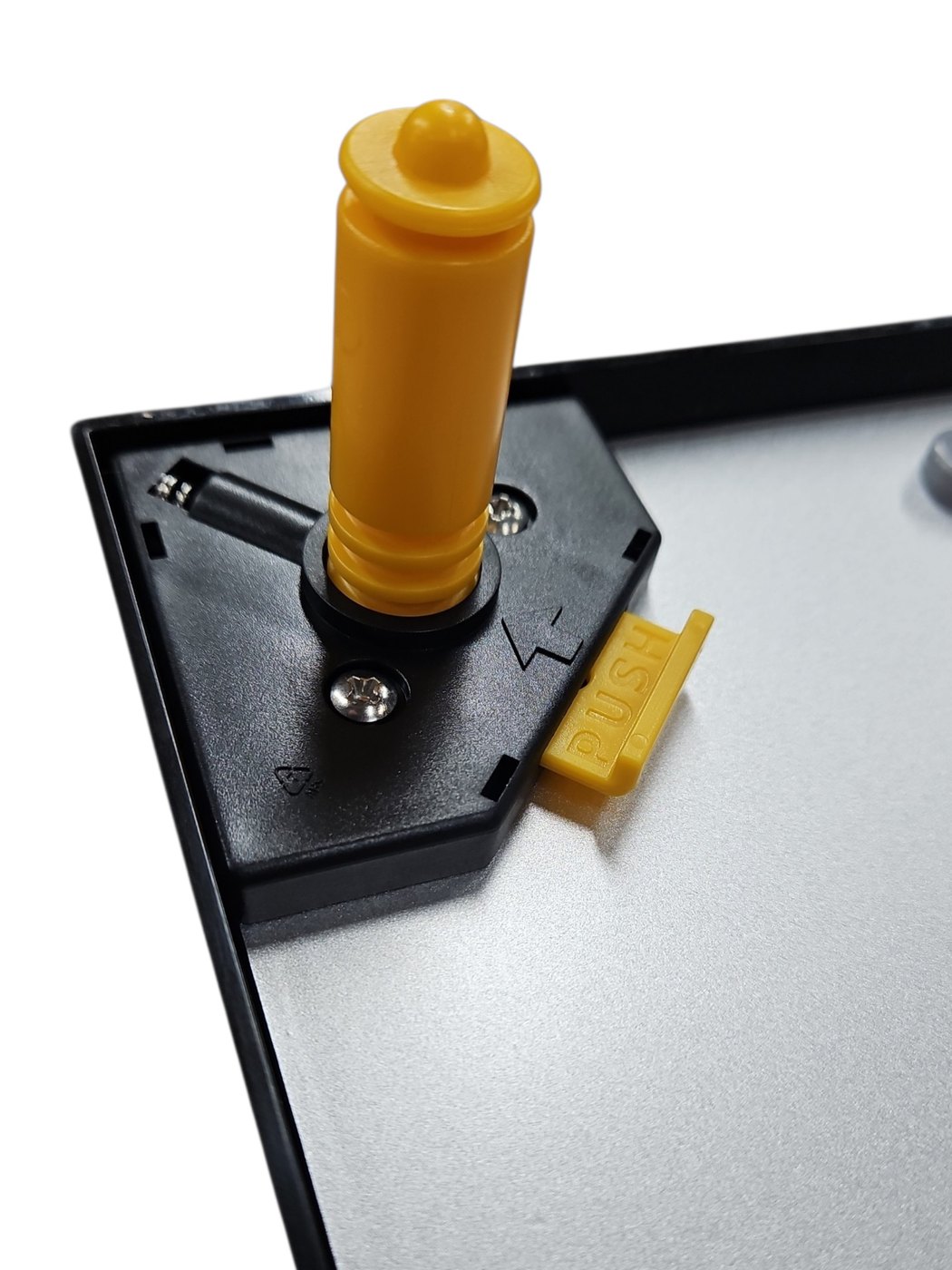
- Lay the plate on its side. Press the yellow PUSH slide at a corner and push a leg in, round end first, to the height you want. A click means it is locked. Do all four
- Stand it in the brooder on a dry, level surface, legs down, with at least two sides open so it can breathe. In a corner, push it right up against the wall so there is no gap a chick can get stuck in
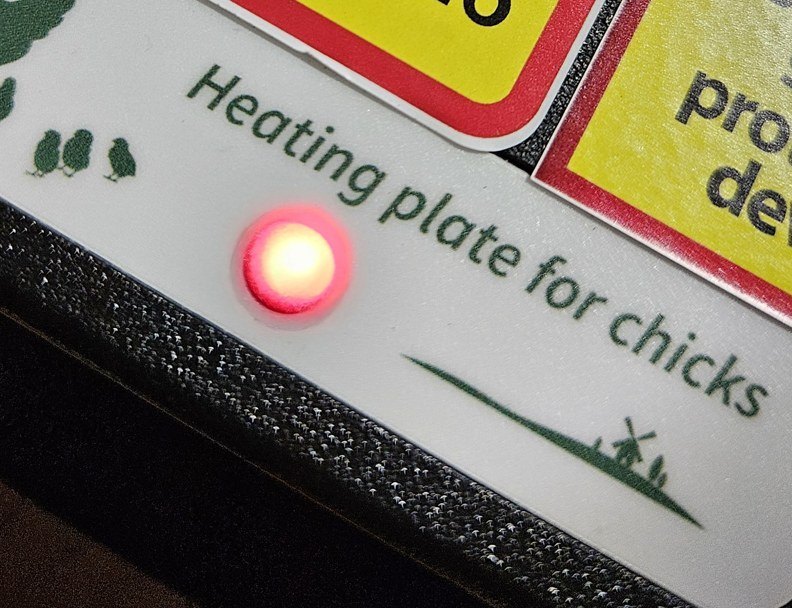
- Plug it into a surge protection device, then the wall. The red light comes on. Give it about 60 minutes to reach temperature
- Let the chicks in near it. Show them under it once if they hesitate
Read the chicks, not a thermometer
Start low for day-olds, so the underside is just above their backs and they duck slightly to get under. Never lower than 3 cm above the litter. Then let the birds tell you:
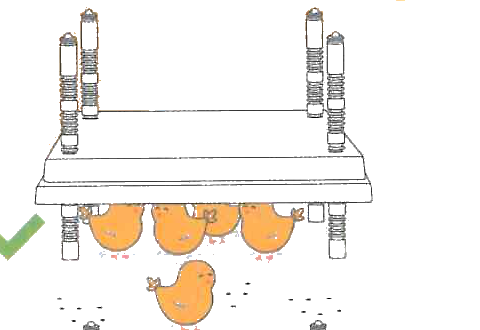
✓ Just right
Calm and quiet underneath. They pop out to eat and drink, then go back under. No cheeping, no huddling.
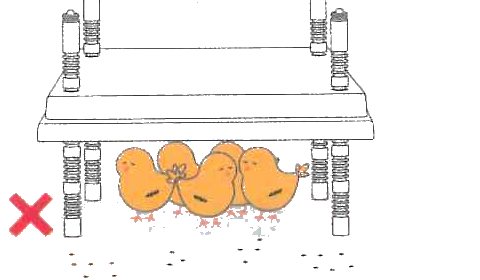
✗ Too high
Under the plate all the time but restless and cheeping, hardly coming out to eat. Lower it.
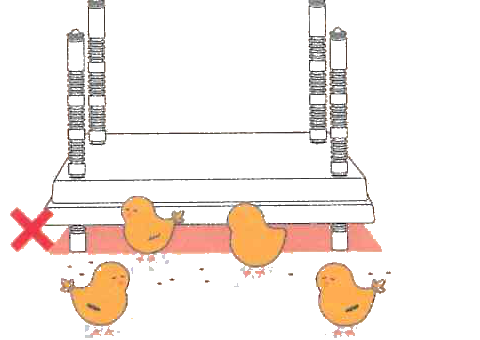
✗ Too low
They struggle to get under, or will not stay under and huddle in a corner away from it. Raise it.
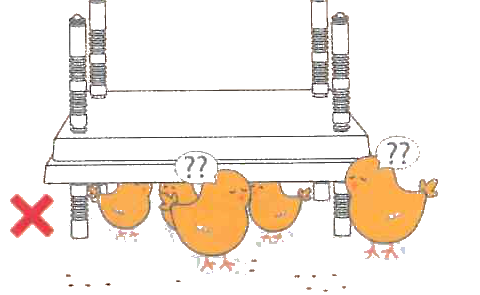
✗ Outgrown
They have grown into it. Raise the plate about once a week, a notch at a time.
A tip worth trying: set the two legs on one side a notch lower so the plate slopes. Each chick then finds its own spot, further in or further out, and regulates its own warmth.
Fully feathered, usually five to six weeks, they no longer need it.
Which plate for how many chicks
| Plate | Size | Chicks | Cover |
|---|---|---|---|
| 15 W | 25 x 25 cm | up to 20 | 25 x 25 cm cover |
| 30 W | 35 x 35 cm | up to 30 | 35 x 35 cm cover |
| 60 W | 45 x 60 cm | up to 50 | 45 x 60 cm cover |
Running more chicks than the plate is rated for means some cannot get under it. If in doubt, run two plates rather than crowd one.
“The brooder plate took a bit to get the height right but has been great for baby chicks!”
Verified customer review, Reviews.io
What people usually add to the order
- 35 x 35 cm acrylic cover — chicks jump on the plate and leave droppings; the cover catches the mess and lifts off to wipe. Cut in our Townsville workshop to fit this plate. It is the only thing that may sit on the plate
- Replacement legs, set of four — they fit every size of plate
- What to feed chickens at every age — starter crumble first, and when to change
The full guide that comes in the box, with more photos, is online: chick heat plate guide.
Cleaning and care
- Unplug first. Wipe with a damp cloth; dried droppings lift with a plastic scraper
- Never submerge the plate or hose it. IPX4 means splash-rated, not washable
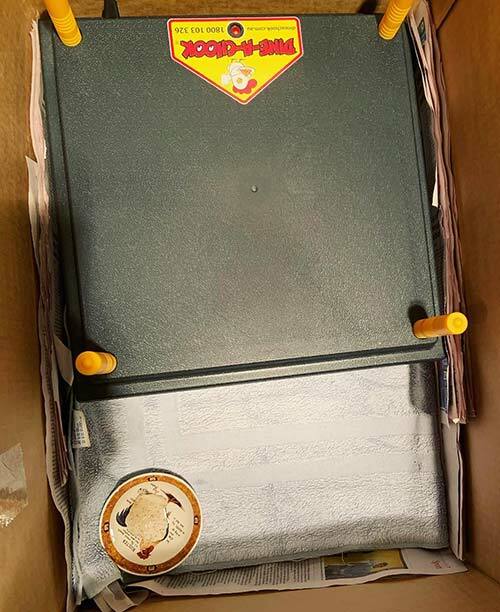
- Between hatches, store it clean and dry with the legs removed, in the box
- Never open, modify or repair the plate, never run it without its legs, and never place anything on top other than the Dine-A-Chook acrylic cover. A damaged cord must be replaced by a qualified person
Use it on a surge protector
Certification put a safety fuse in the plate: a storm surge blows it so the plate stops rather than overheats, and it cannot be repaired. A power board or adaptor marked surge protected, from any hardware store, absorbs the surge first. It is the one condition on the 12-month warranty. Register your plate and your surge protector is on record.
Specifications
| Power | 30 W, 220–240 V, Australian plug fitted |
| Heating surface | 35 x 35 cm |
| Capacity | Up to 30 chicks |
| Legs | Four, telescopic, about 5–15 cm, PUSH-slide lock |
| Weight | 2.1 kg |
| Certification | RCM, Global-Mark 510491; AS/NZS 60335.2.71:2018 and AS/NZS 60335.1:2020; 220–240 V, 50–60 Hz, Class II, IPX4. Responsible supplier Four Chickens Pty Ltd, Garbutt, Townsville |
| Construction | Durable ABS body, fire-resistant insulation, temperature and resistance fuses. Made overseas, certified for Australia; the matching acrylic cover is cut in our Townsville workshop |
| Use with | A surge protection device (warranty condition). Indoors or a draught-free shed, rooms above 10 °C |
| Suits | Chicks, bantams, quail, ducklings, goslings |
| Warranty | 12 months, with a surge protector in use. Register your plate |
| In the box | Heat plate, four legs, printed quick start guide |
Frequently Asked Questions
The questions people ask about chick heat plates, and the two we get on the phone every spring.
How many chicks can the 30 W heat plate warm?
Up to 30. It is 35 x 35 cm, and every chick needs to fit underneath at once. Running more than that means some cannot get under it; if in doubt, run two plates rather than crowd one.
Heat plate or heat lamp for chicks?
A heat lamp heats the air and the room with a bulb, day and night. A heat plate warms only the chicks that sit under it, the way a hen does, draws a fraction of the power, and there is no bulb and no light, so the chicks sleep in the dark. Many of our customers switch after worrying about a lamp in a shed. Set the plate low for day-olds and raise it as they grow.
How long do chicks need a heat plate?
Until they are fully feathered, usually five to six weeks, sooner in warm weather. Raise the plate about once a week as they grow. Once they spend most of their time out from under it and sleep away from it, they are done with it.
Why does the red light go on and off?
That is normal, and it is the question we get asked most. The light is on while the plate is heating. When it reaches temperature it switches off, and it comes back on whenever the plate heats again. A dark light is not a fault: put your hand under the plate and it is still warm.
Do I really need a surge protector?
Yes. Certification for Australia required a safety fuse in the plate. A mains spike blows the fuse so the plate stops rather than overheats, and the fuse is not repairable. A surge protection device absorbs the spike first. The warranty applies only when the plate was used on one. It must say surge protection or surge protected on the device itself; a plain power board with overload protection is not one.
What height should the plate be?
Start low for day-olds: the underside just above their backs, so they duck slightly to get under, never lower than 3 cm above the litter. Then read the chicks. Calm and quiet underneath is right. Huddled and cheeping under it means too high, lower it. Avoiding it means too low, raise it. Setting one side a notch lower so the plate slopes lets each chick pick its own spot.
Does the top of the plate get hot?
The heat is delivered underneath, to the chicks. Even so, nothing should sit on top of the plate except the Dine-A-Chook acrylic cover, which is made to fit it. Chicks will jump on the plate, and the cover catches the droppings and lifts off to wipe.
Can I use it for ducklings, quail or goslings?
Yes. It suits chicks, bantams, quail, ducklings and goslings. Adjust the height to the size of the birds, and keep ducklings' water away from the plate so the litter under it stays dry.
Where should the plate go in the brooder?
Indoors or in a draught-free shed, on a dry, level surface, in rooms above 10 degrees. Most people put it in a corner with food and water in the opposite corner so the chicks move between them. Keep at least two sides, including one long side, fully open so the plate can breathe. Against a wall or in a corner, push it right up so there is no gap a chick can get stuck in.
How do I clean it?
Unplug it, wipe with a damp cloth, and lift dried droppings with a plastic scraper. Never submerge it or hose it: it is splash-rated, not washable. The 35 x 35 cm acrylic cover makes it a ten-second job, and it lifts straight off. Between hatches, store the plate clean and dry with the legs removed.
What is the warranty, and how do I register?
12 months from purchase against faults in materials and workmanship, with one condition: the plate must have been used on a surge protection device. A blown fuse without one is not covered and cannot be repaired. Registering takes two minutes at dineachook.com.au/pages/register-heat-plate.html and puts your surge protector on record. Keep your receipt.
Is the heat plate Australian made?
The plate itself is made overseas and independently certified to the Australian electrical safety standards (RCM, Global-Mark certificate 510491). The acrylic cover that fits it is cut and finished in our own Townsville workshop. Dine-A-Chook is an Australian family business, supplying backyard keepers since 2009.
Still not sure? The full guide is online, or ring 1800 103 326 in Queensland business hours.