Why Chicken Feeders Waste Feed (And How to Reduce It)
Why Chicken Feeders Waste Feed (And How to Reduce It)
If you’re looking for chicken feeders designed to reduce waste, you can view our full range here → Australian made chicken feeders
Feed waste is one of the most common frustrations for backyard chicken keepers. Spilled grain attracts rodents, turns muddy in wet weather, and quietly adds up to a lot of wasted money over time.
This guide explains why many chicken feeders waste feed, what design and setup factors cause spillage, and how correct feed choice and installation can significantly reduce losses around the coop.
Dine-A-Chook is a proud Australian family-owned company, committed to providing practical, long-term solutions for backyard chicken keepers.
What type of feed helps reduce waste?
Two elements determine how much feed is wasted:
- The type of feed you use
- The design and setup of the feeder itself
If chickens are fed scratch or mixed grain, they naturally pick out their favourite pieces and flick the rest onto the ground. While scratch feed can be cheaper to buy, selective feeding behaviour quickly turns it into expensive waste.
Pellets, mash, or crumble feeds flow more consistently in enclosed feeders and reduce selective eating, helping ensure more of the feed you buy is actually eaten.
Why feeder design makes such a difference
Chickens don’t eat neatly. They rake, pull, and flick feed as they eat. If feed is exposed near the edge of a feeder, it ends up on the ground.
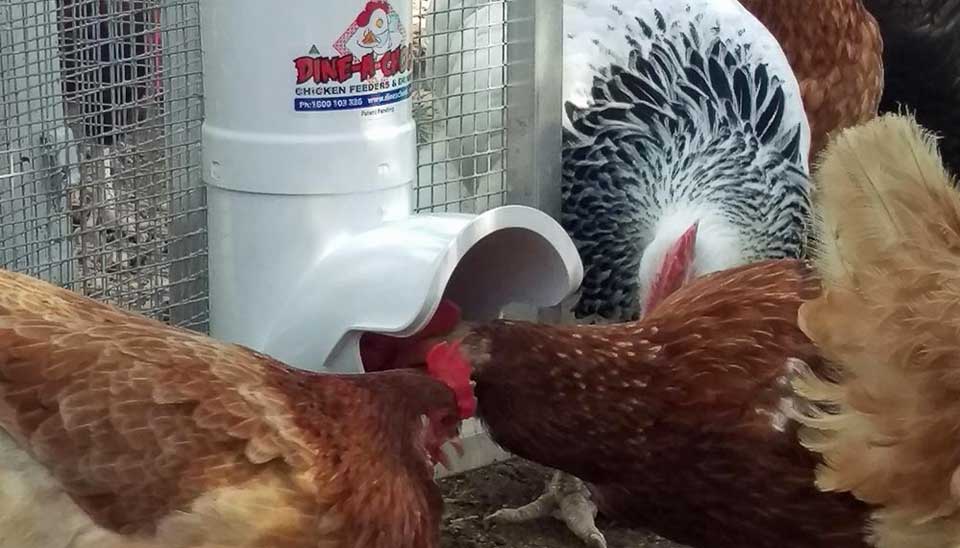
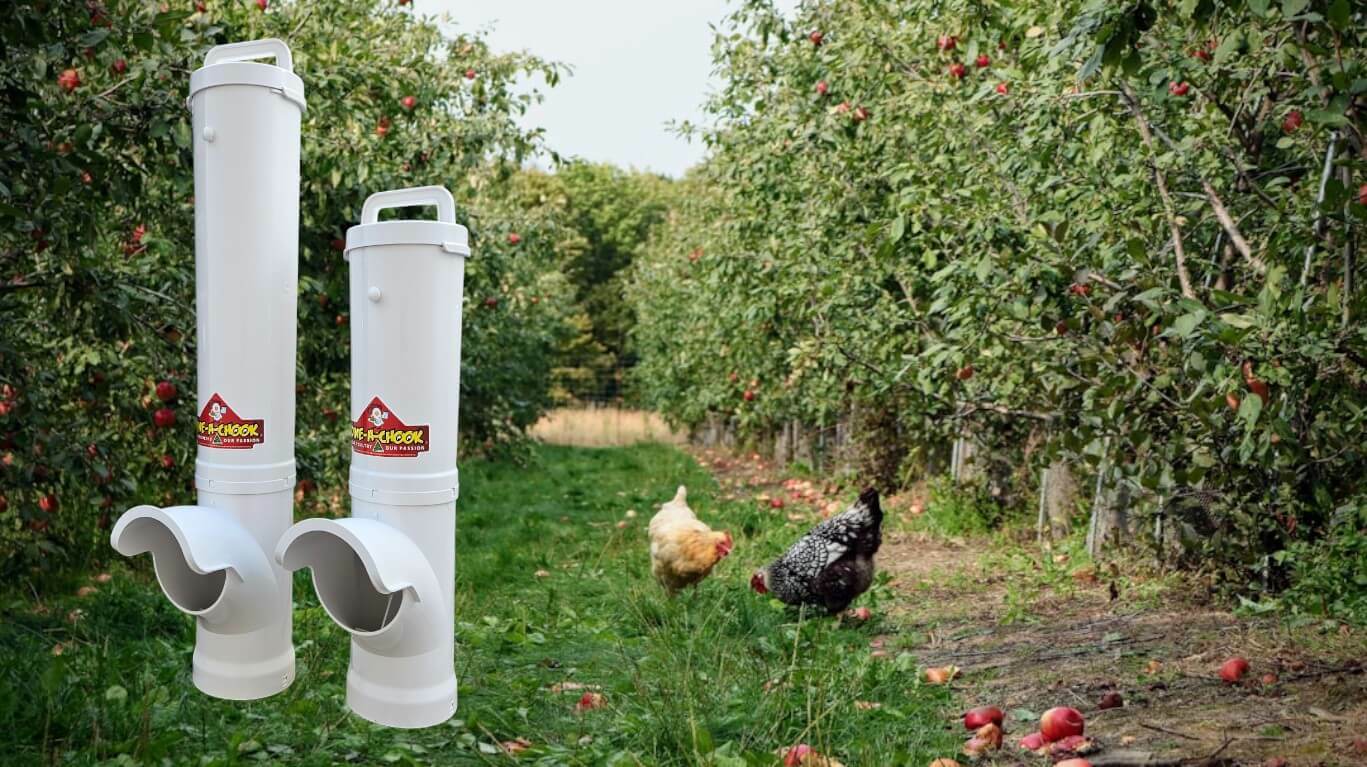
A waste-reducing feeder uses internal geometry to keep feed away from the opening, limit raking and pulling, and protect feed from rain. This helps reduce spillage, keeps feed drier, and makes the area around the coop less attractive to rodents.
For feeders built specifically around these principles, you can see our range of Dine-A-Chook chicken feeders.
How to install a chicken feeder to minimise waste
Correct installation plays a big role in how well a feeder performs.
Mounting your feeder using the in-built hooks:
Dine-A-Chook Chicken Feeders include moulded rear hooks. Only two hooks are required to mount the feeder. These can be used in many modern chicken coops. If the mounting surface is not strong enough, a timber or steel post may be needed.
Mounting your feeder using the mounting kit:
If hooks are not suitable, a mounting kit with steel brackets and screws allows the feeder to be secured to timber or metal surfaces using standard tools.
- Position the feeder at the correct height
- Mark bracket locations
- Secure brackets and hang the feeder
How high off the ground should a chicken feeder be?
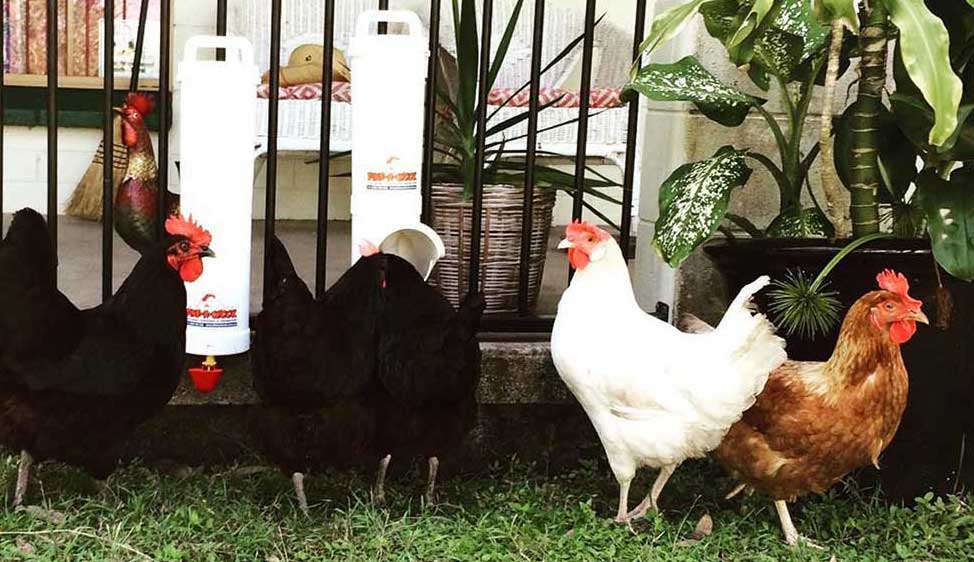
Feeders work best when mounted at “chicken height” — roughly level with the back of the bird’s neck. This helps control feeding behaviour and reduces flicking.
Chicken height varies by breed. In mixed flocks, mount the feeder for the smallest birds and add a second feeder if required. If birds struggle to access the feed, lower the feeder slightly.
If you have an established rodent problem, mounting the feeder slightly higher and providing a stable step for chickens can further reduce pest access.
Where should a chicken feeder be installed?
Although feeders are designed to handle outdoor conditions, installing them in a sheltered location helps protect feed from weather and reduces spoilage.
Installation inside the coop or under cover is ideal where practical.
Even in heavy rain, well-designed feeders can perform effectively when positioned correctly.
How often does a chicken feeder need refilling?
Refill frequency depends on flock size, feed type, and season.
As a general guide:
- 3.5L feeder: approximately 4 chickens for around 4 days
- 4.7L feeder: approximately 6 chickens for around 4 days
Consumption will vary, so check regularly until a pattern is established.
How much feed should be visible?
In many enclosed feeders, the feed level can look low even when the feeder is working correctly. As long as feed can be moved with a finger, chickens can access it.
For feeders designed to reduce waste and mess, view our full range of Dine-A-Chook chicken feeders.
Cheers,
Ryan Biggin